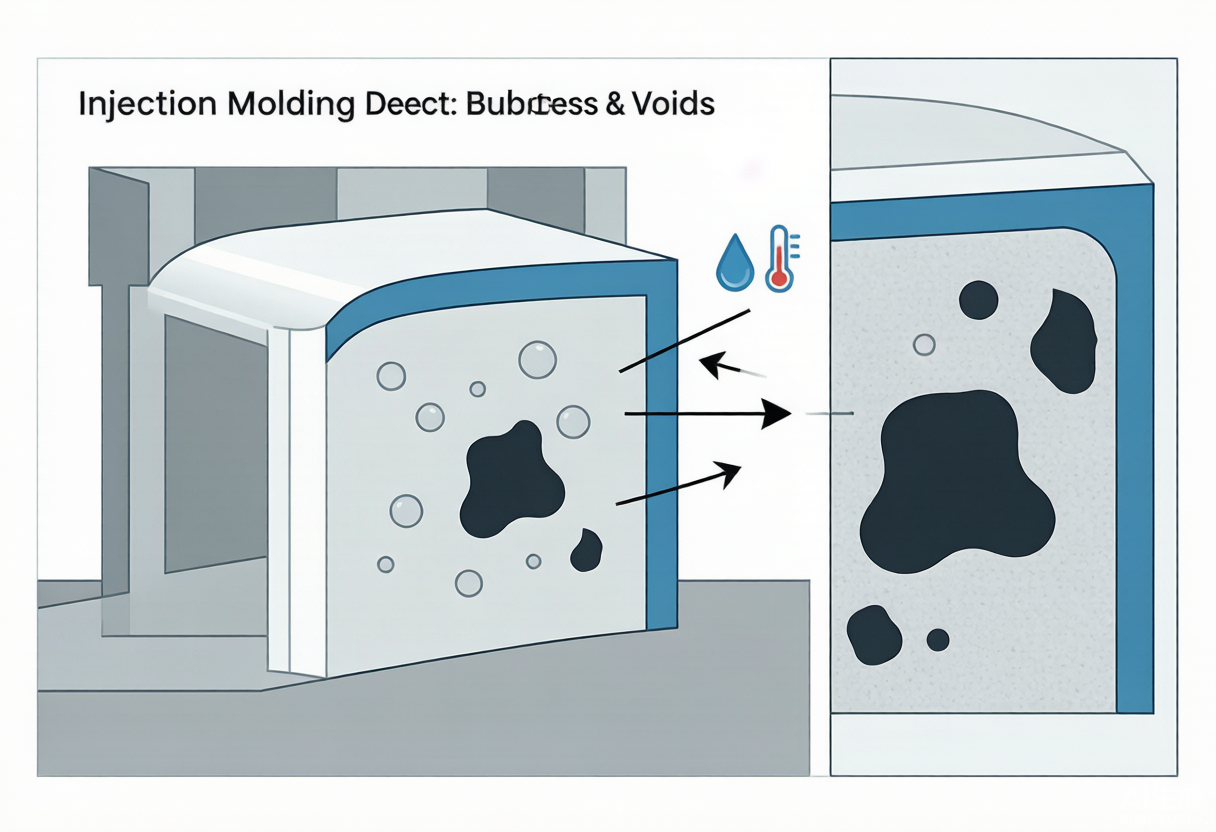
Các bọt khí trong quá trình ép phun thường do không khí bị kẹt lại, độ ẩm trong nhựa, khí sinh ra từ nhựa bị quá nhiệt, hệ thống thoát khí kém, áp lực nén không đủ hoặc các phần thành dày bị co ngót bên trong. Cách khắc phục phù hợp phụ thuộc vào việc bọt khí nằm gần bề mặt, bên trong phần thành dày, xung quanh lỗ rót hay lan rộng khắp chi tiết đúc.
Đối với người mua, các bọt khí không chỉ là khuyết tật bề ngoài. Chúng có thể làm giảm độ bền, gây ra nguy cơ rò rỉ, làm suy yếu các phần gờ và kẹp, đồng thời là dấu hiệu cho thấy vật liệu hoặc quy trình đúc chưa ổn định. Nhà cung cấp cần phân biệt rõ các vấn đề liên quan đến quá trình sấy nhựa với các vấn đề về hệ thống thoát khí khuôn, cửa rót, vùng nén và thiết kế chi tiết trước khi tiến hành thay đổi khuôn mẫu.
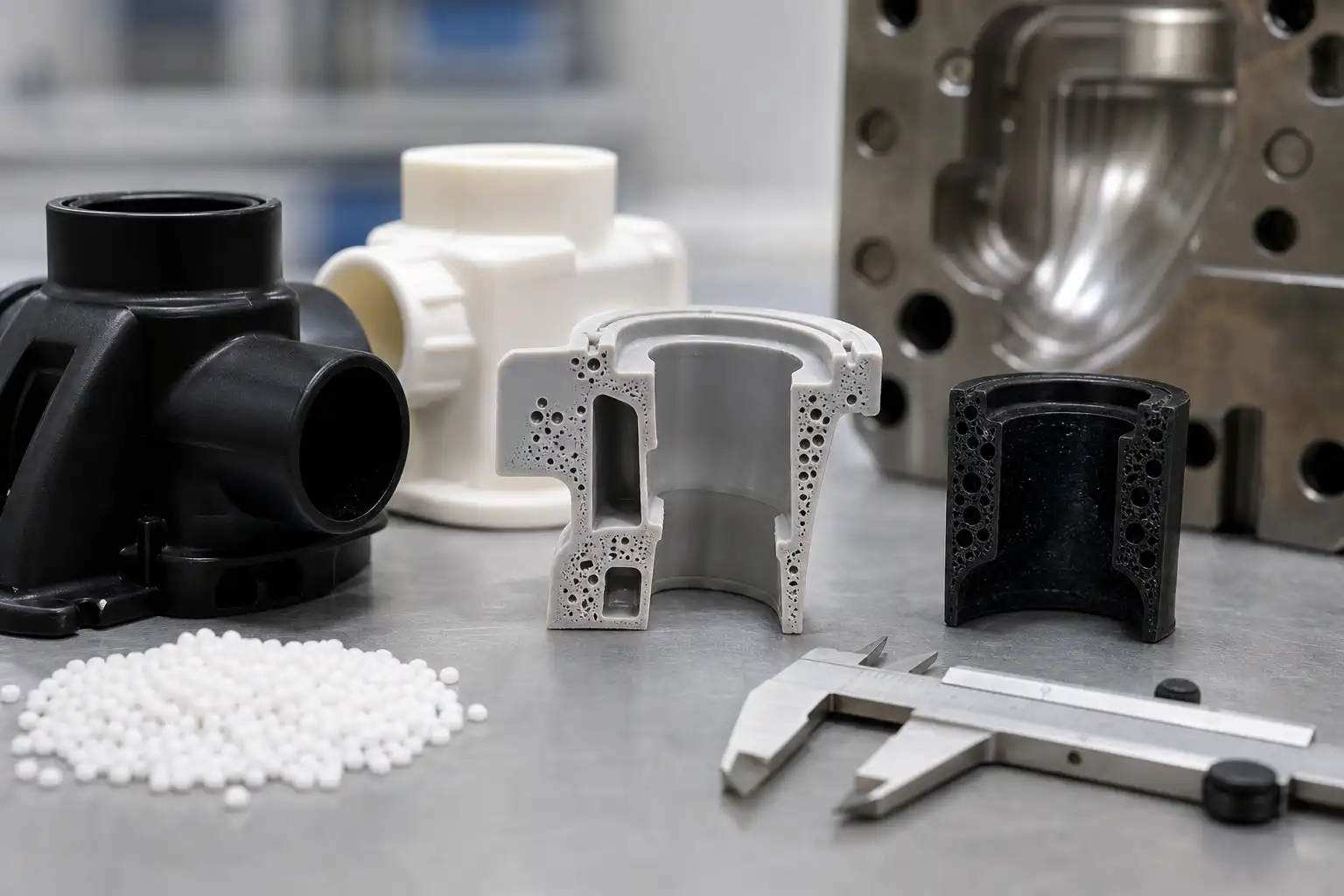
Các nguyên nhân phổ biến gây ra bọt khí trong quá trình ép phun
| Nguyên nhân / nguyên liệu | Dấu hiệu hoặc cách sử dụng điển hình | Hành động của bên mua hoặc bên kỹ thuật |
|---|---|---|
| Độ ẩm trong nhựa | Sự phồng ra, bọt khí, các vùng giòn hoặc vết bạc | Sấy nhựa theo hướng dẫn trong bảng thông số kỹ thuật của vật liệu và kiểm tra việc kiểm soát độ ẩm |
| Không khí bị kẹt | Các bọt khí gần các đường gân, các điểm lồi, phần cuối của vùng đổ đầy hoặc vùng hàn | Cải thiện hệ thống thoát khí, vị trí cửa phun, đường đi của dòng chảy hoặc đường cong tốc độ phun |
| Quá nhiệt | Dấu vết do khí, vết cháy, đốm đen hoặc các lỗ rỗng ngẫu nhiên | Giảm nhiệt độ nóng chảy, giảm thời gian lưu và kiểm tra tốc độ trục vít |
| Đóng gói không đầy đủ | Các lỗ rỗng bên trong ở các phần có độ dày lớn | Tăng áp suất/thời gian nén và kiểm tra tình trạng đóng băng cửa phun |
| Thiết kế chi tiết | Các lỗ rỗng lặp lại trên tường dày hoặc các phần nhô ra riêng lẻ | Giảm độ dày của các phần dày, khoét lõi các phần nhô ra và cải thiện độ chuyển tiếp của thành |
Cách xác định vị trí bọt khí
- Các bọt khí bên trong các phần có độ dày lớn thường là dấu hiệu của các lỗ rỗng do co ngót chứ không phải do không khí bị kẹt bên ngoài.
- Sự xuất hiện bọt khí gần đầu dòng chảy thường cho thấy có vấn đề về tốc độ xả khí hoặc tốc độ bơm.
- Các bọt khí có vệt màu bạc thường cho thấy sự hiện diện của độ ẩm hoặc sự xuống cấp của vật liệu.
- Các bọt khí xung quanh các phần nhô ra và các đường gân có thể cần phải điều chỉnh DFM, chứ không chỉ đơn thuần là tinh chỉnh quy trình.
- Các bọt khí chỉ xuất hiện sau khi có sự thay đổi về nguyên liệu cần phải là cơ sở để tiến hành kiểm tra quá trình sấy nhựa và đánh giá chất lượng.
Kiểm tra nguyên liệu và quá trình sấy khô
| Chất liệu / vỏ | Mối quan tâm chính | Ghi chú về việc lựa chọn |
|---|---|---|
| Nylon PA6 / PA66 | Độ nhạy cao với độ ẩm | Việc sấy khô là rất quan trọng trước khi đúc các chi tiết có chứa chất độn hoặc được gia cố bằng sợi thủy tinh |
| Máy tính cá nhân | Độ nhạy cảm với độ ẩm và nhiệt độ | Việc sấy khô không đúng cách có thể dẫn đến hiện tượng cong vênh, bong bóng và các bộ phận dễ gãy |
| ABS | Nhu cầu sấy ở mức trung bình | Kiểm tra độ ẩm, hiện tượng quá nhiệt và thời gian lưu giữ quá lâu |
| POM | Nguy cơ phân hủy nhiệt | Tránh để thiết bị quá nhiệt và đảm bảo thiết bị hoạt động trong phạm vi an toàn |
| PP / PE | Giảm bớt lo ngại về độ ẩm | Tập trung nhiều hơn vào hệ thống thông gió, cách nhiệt và thiết kế tường |
Chi tiết yêu cầu báo giá (RFQ) của người mua về khắc phục sự cố bong bóng
Để nhận được đánh giá hữu ích, vui lòng gửi mô hình 3D hoặc bản vẽ 2D, loại nhựa hoặc vật liệu mục tiêu, ảnh chi tiết sản phẩm (nếu khuyết tật đã tồn tại), thông tin về máy móc và khuôn mẫu (nếu có), sản lượng dự kiến hàng năm, yêu cầu về thẩm mỹ, kích thước quan trọng, môi trường ứng dụng và bất kỳ tiêu chuẩn kiểm tra nào. Nylon Plastic có thể đánh giá thiết kế, vật liệu và quy trình đúc trước khi thực hiện các thay đổi về khuôn mẫu hoặc quy trình sản xuất.
Bubble Troubleshooting: Surface, Internal or Process-Origin
- Surface bubbles or blisters: check trapped gas, moisture, volatile contamination, venting, and local overheating.
- Internal voids in thick sections: check volumetric shrinkage, packing access, gate freeze, cooling, and section mass.
- Bubbles around a gate or insert: check shear, trapped air, insert temperature, venting, and flow hesitation.
- Lot-dependent bubbles: quarantine the lot and verify grade, moisture, storage, regrind, color, and residence time before changing the mold.
Cutting a part open, comparing the defect location with the flow path, and reviewing a controlled short-shot sequence often provides more useful evidence than changing several settings at once.
Nhựa nylon hỗ trợ dự án như thế nào
Nylon Plastic has supported material selection and finished plastic-part manufacturing since 2005. For injection molding bubble diagnosis, the useful review connects the drawing, material, tooling or machining route, inspection state, and production plan before a quote is approved.
- Review nylon pellet identity, sealed storage, dryer performance, moisture testing, and the lot boundary when a hygroscopic resin is involved.
- Separate material handling from mold venting, packing, cooling, and thick-section design before approving a corrective action.
- Coordinate prototype or molded samples, dimensional inspection, cross-sections, and the production acceptance standard in the same review.
Bài đọc liên quan
Câu hỏi thường gặp
Điều gì gây ra hiện tượng xuất hiện bọt khí trong quá trình ép phun?
Bubbles can result from trapped air, resin moisture, volatile material, overheating, poor venting, insufficient packing, or internal shrinkage in thick sections.
Các bọt khí trong quá trình ép phun có phải luôn là vấn đề liên quan đến vật liệu không?
No. The location and shape may point to mold venting, gate shear, packing, cooling, insert temperature, or section design. Verify material and process evidence together.
How can nylon moisture create bubbles?
Wet nylon can release vapor during melting and can also lose molecular weight through hydrolysis. Verify the exact grade, dryer dew point, residence time, and pellet moisture with a validated method.
What should buyers send for bubble troubleshooting?
Send the CAD and drawing, material grade and lot, moisture and dryer records, bubble location, cross-section or photos, gate and vent details, process settings, and acceptance requirements.
Request an Injection Molding Bubble Review
Send the material records, defect evidence, part files, and process information for a controlled root-cause review.