Công nghệ đúc áp suất thấp sử dụng áp suất phun tương đối thấp và vật liệu nóng chảy, thường là các loại vật liệu gốc polyamide, để bao bọc các linh kiện điện tử, cụm cáp, cảm biến và đầu nối. Công nghệ này rất hữu ích trong các trường hợp cần niêm phong, giảm căng thẳng hoặc bảo vệ các linh kiện nhạy cảm khỏi tác động của môi trường mà không cần đến lực kẹp và áp suất cao như trong quy trình đúc phun truyền thống.
Quy trình này không phải là giải pháp thay thế trực tiếp cho mọi loại vỏ nhựa đúc. Tốt nhất nên xem đây là một phương pháp bao bọc bảo vệ dành cho các linh kiện điện tử và cụm linh kiện, trong những trường hợp mà việc đổ keo, đúc phủ hoặc sử dụng vỏ nhựa cứng có thể quá chậm, quá nặng hoặc gây áp lực quá lớn.
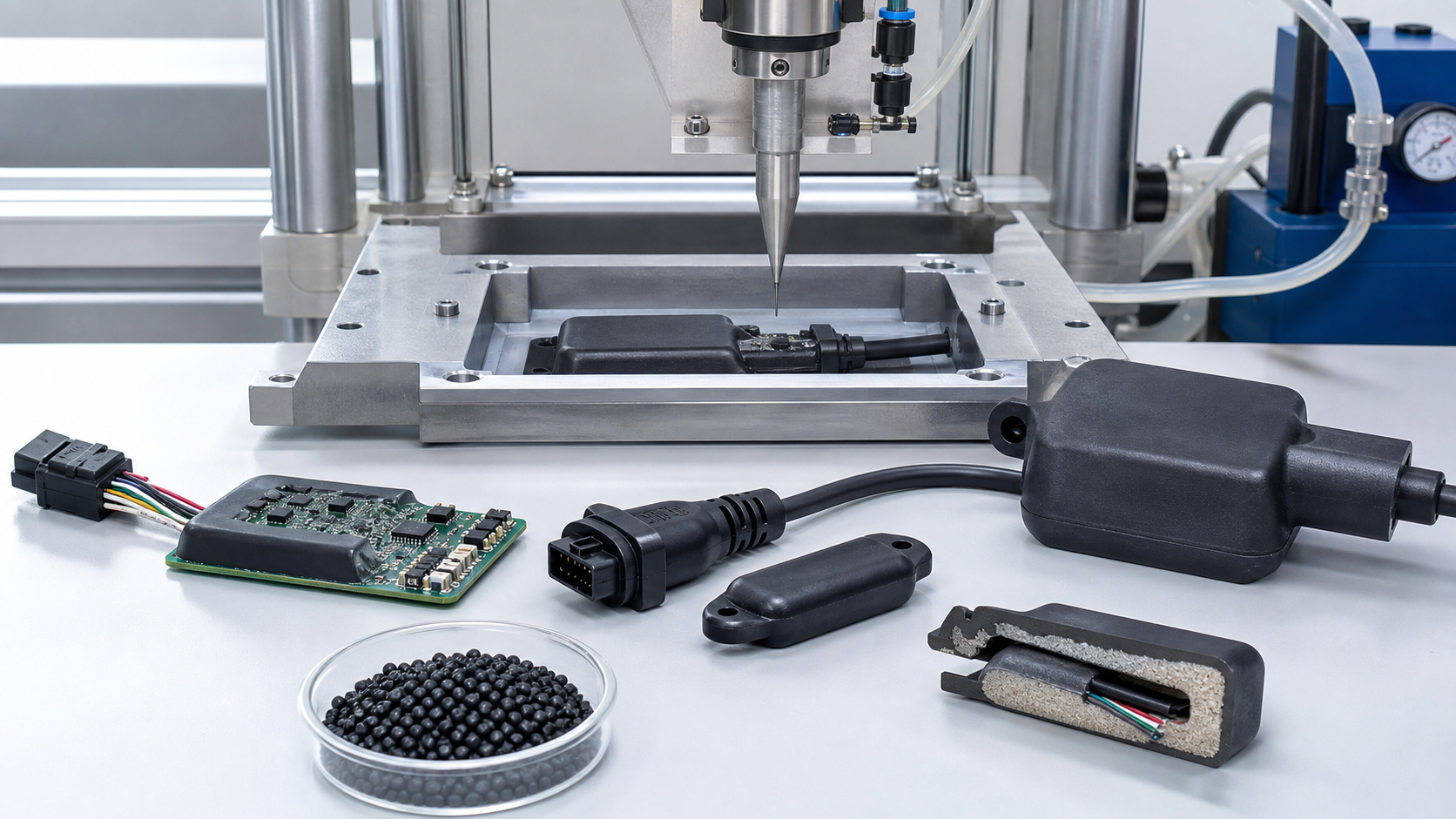
Ứng dụng của công nghệ đúc áp suất thấp
Giá trị chính nằm ở khả năng bảo vệ với mức độ ứng suất trong quá trình sản xuất thấp hơn. Dụng cụ gia công có thể đơn giản hơn so với khuôn ép phun truyền thống, nhưng vẫn cần xem xét kỹ lưỡng về hình học chi tiết, độ bám dính của vật liệu và độ nhạy của các linh kiện điện tử.
| Ứng dụng | Tại sao phương pháp đúc áp suất thấp lại mang lại lợi ích? | Vấn đề kỹ thuật |
|---|---|---|
| Bộ giảm lực căng cho đầu nối cáp | Bảo vệ điểm ra của dây và tăng cường độ bền khi sử dụng | Kiểm tra bán kính uốn và độ bám dính. |
| Bảo vệ bảng mạch in (PCB) | Bảo vệ các bộ phận khỏi bụi và độ ẩm | Xác nhận độ nhạy nhiệt và chiều cao của linh kiện. |
| Bao bọc cảm biến | Tạo lớp bảo vệ bao quanh các thiết bị điện tử | Kiểm tra lại đường dẫn kín và mức độ tiếp xúc với nhiệt. |
| Mô-đun điện nhỏ | Kết hợp chức năng chứa và trồng cây | Kiểm tra nhiệt độ làm việc và mức độ tiếp xúc với hóa chất. |
| Vỏ bảo vệ mạch điện tử nguyên mẫu | Có thể nhanh hơn so với phương pháp gia công bằng khuôn cứng đối với các hình dạng đơn giản | Không phải lúc nào cũng phù hợp với các vỏ mỹ phẩm đòi hỏi độ chính xác cao. |
Danh sách kiểm tra thiết kế trước khi chế tạo khuôn mẫu
- Xác nhận nhiệt độ tối đa mà các thiết bị điện tử hoặc dây cáp có thể chịu được.
- Xác định yêu cầu về khả năng chống thấm: chống bắn nước, chống bụi, chống ẩm hoặc chống ngâm nước.
- Kiểm tra độ bám dính với vỏ cáp, vật liệu đầu nối hoặc bề mặt bảng mạch in (PCB).
- Tránh các góc nhọn và không khí bị kẹt xung quanh các bộ phận.
- Lập kế hoạch cho các biện pháp giảm căng, các chi tiết lắp đặt và các tiêu chí kiểm tra.
Đúc áp suất thấp so với các quy trình khác
Quá trình đúc áp suất thấp có những điểm tương đồng với các phương pháp đúc đổ khuôn, đúc chèn và đúc phủ, nhưng lại tuân theo một logic khác về vật liệu và khuôn mẫu.
| Quy trình | Phù hợp nhất cho | Khi nào nên tránh |
|---|---|---|
| Đúc áp suất thấp | Bọc kín linh kiện điện tử và thiết bị giảm lực căng cáp | Vỏ nhựa kết cấu có độ chính xác cao. |
| Đúc phun truyền thống | Các chi tiết nhựa cứng sản xuất với số lượng lớn | Các thiết bị điện tử rất dễ hỏng nếu không được bảo vệ. |
| Trồng cây vào chậu | Trám lỗ rỗng đơn giản và cách điện | Cần thời gian chu kỳ nhanh hoặc bề mặt sản phẩm đúc phải phẳng mịn. |
| Đúc chèn | Các miếng lót bằng kim loại hoặc nhựa được cố định vào các chi tiết đúc | Vật liệu bao bọc PCB nhạy nhiệt. |
| Đúc phủ TPE | Bề mặt cầm nắm mềm mại, bề mặt kín hoặc bề mặt cảm ứng | Khi mục tiêu là đóng gói hoàn toàn bằng điện tử. |
Các liên kết nội bộ để lựa chọn quy trình
Đối với một linh kiện tùy chỉnh, phương pháp đúc áp suất thấp cần được so sánh với các phương pháp đúc chèn, đúc phủ, vỏ bảo vệ gia công CNC và đúc phun truyền thống.
- Hướng dẫn đúc chèn
- Hướng dẫn đúc phủ
- Hướng dẫn về các chi tiết nhựa đúc theo yêu cầu
- Nhà sản xuất các bộ phận nhựa theo yêu cầu
Câu hỏi thường gặp
Phương pháp đúc áp suất thấp được sử dụng để làm gì?
Phương pháp đúc áp suất thấp thường được sử dụng để bảo vệ các thiết bị điện tử, cụm cáp, đầu nối, cảm biến và các mô-đun nhỏ bằng vật liệu đúc bao bọc.
Đúc áp suất thấp có giống với đúc phun không?
Phương pháp này có liên quan, nhưng sử dụng áp suất thấp hơn nhiều và các loại vật liệu nóng chảy khác nhau. Phương pháp ép phun truyền thống thường phù hợp hơn với các chi tiết nhựa cứng được sản xuất với số lượng lớn.
Các vật liệu nào được sử dụng trong quá trình đúc áp suất thấp?
Các vật liệu polyamide nóng chảy rất phổ biến, nhưng việc lựa chọn vật liệu phù hợp phụ thuộc vào độ bám dính, nhiệt độ, tác động hóa học và các yêu cầu về khả năng bịt kín.
Quá trình đúc áp suất thấp có cần khuôn mẫu không?
Đúng vậy, nhưng tùy thuộc vào hình dạng chi tiết và khối lượng sản xuất, khuôn mẫu thường có thể đơn giản hơn so với khuôn ép phun áp suất cao thông thường.