Two-Shot là một chủ đề kỹ thuật thực tiễn khi bạn cần so sánh các phương án, kiểm tra các giới hạn và lựa chọn quy trình có mức độ rủi ro thấp hơn.
Multi-Material Molding Overview

Multi-material molding combines different materials in a single part to achieve functional or aesthetic benefits. Two-shot molding and overmolding are the primary techniques, each with distinct advantages.
Two-Shot Molding
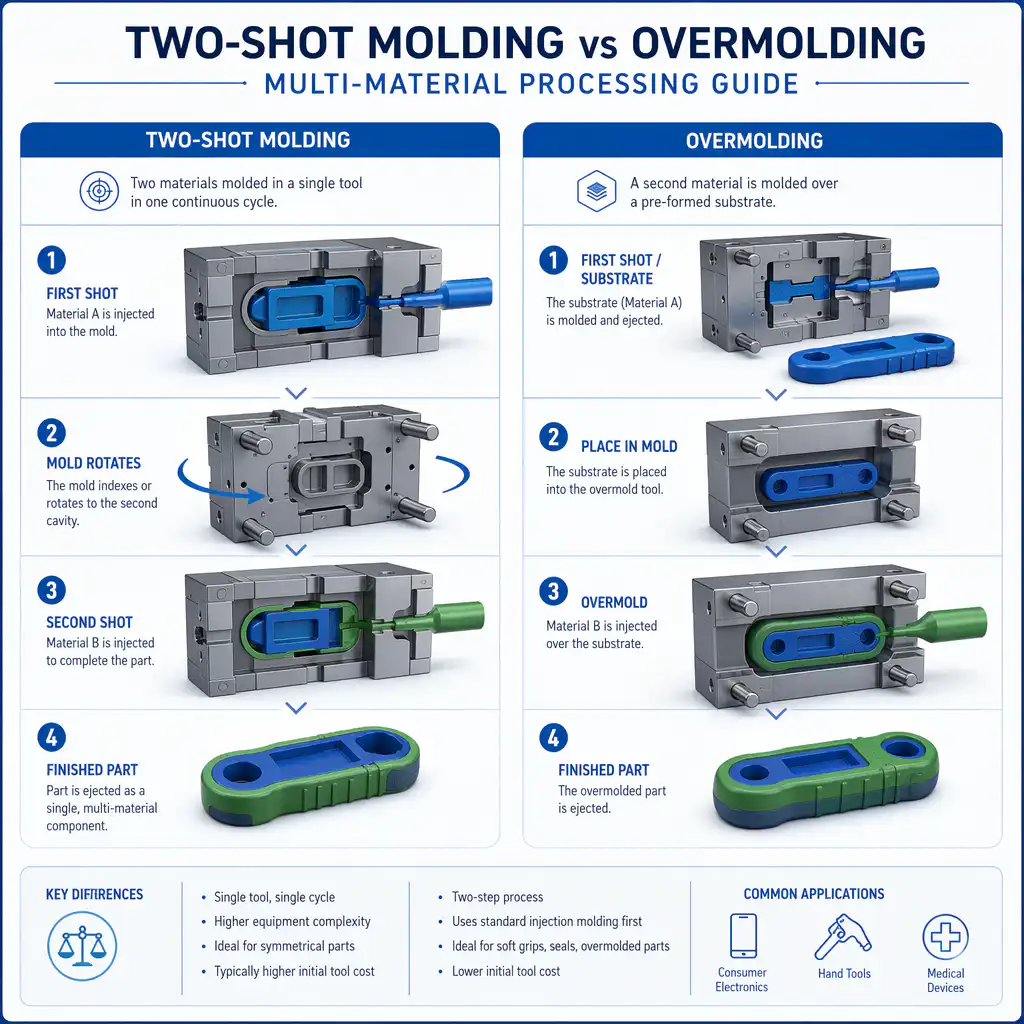
Two-shot molding (also called 2K molding or multi-component molding) injects two different materials in a single molding cycle using a specialized machine with two injection units.
Mô tả quy trình
- First material injected into mold cavity
- Mold rotates or transfers to second position
- Second material injected over or alongside first
- Part ejected as complete unit
Ưu điểm
- Excellent material bonding (chemical bond possible)
- High precision and repeatability
- Single cycle production
- Design flexibility for complex geometries
- Reduced labor and handling
Nhược điểm
- Higher machine and tooling cost
- Requires specialized equipment
- Less flexibility for design changes
- Longer tooling lead time
Đúc phủ
Overmolding uses two separate molding cycles. A substrate part is molded first, then placed in a second mold where additional material is injected over it.
Mô tả quy trình
- Substrate molded in first mold
- Substrate placed in second mold
- Second material injected over substrate
- Completed part ejected
Ưu điểm
- Lower equipment cost
- Can use standard injection machines
- More design flexibility
- Easier to change colors/materials
- Suitable for lower volumes
Nhược điểm
- Requires two molding cycles
- Additional handling and labor
- Bond quality depends on mechanical interlock
- Higher per-part cost at high volumes
Tính tương thích của vật liệu
Ứng dụng
Two-Shot Molding:
- Automotive interior components
- Medical devices with soft grips
- Consumer electronics buttons and keys
- Sealed enclosures with gaskets
Overmolding:
- Tool handles and grips
- Encapsulated electronics
- Cable connectors
- Product branding and logos
Decision Factors
- Volume: High volume favors two-shot; low volume favors overmolding
- Bond requirements: Chemical bond needs two-shot
- Budget: Overmolding has lower upfront costs
- Thiết bị: Two-shot requires specialized machines
Kết luận
Both techniques produce multi-material parts successfully. Evaluate production volume, bond requirements, and available equipment to determine the best approach.
Tài nguyên liên quan
- Hướng dẫn về nhiệt độ in trên vải nylon
- Gia công CNC nylon
- In 3D để tạo mẫu so với sản xuất
- Hướng dẫn lựa chọn vật liệu nhựa
- Các yếu tố ảnh hưởng đến chi phí nhựa kỹ thuật
Process Decision Table for Production Parts
| Decision factor | Two-shot molding | Đúc phủ |
|---|---|---|
| Tooling route | One indexed or rotary tool with two injection units | Separate substrate and overmold steps, or an insert tool |
| Phù hợp nhất | High registration, repeatability and production volume | Flexible launches, inserts or lower initial tool complexity |
| Main risk | Transfer alignment, shot balance and interface validation | Insert position, surface preparation and bond variation |
| Validation | Registration, weld lines and interface strength | Retention features, cleanliness and pull testing |
Choose after checking the material pair, annual volume, gate and parting-line limits, substrate tolerance and the test method for the completed interface. Include the DFM drawing, material datasheets, trial plan and bond requirement in the RFQ. See the overmolding guide for the broader tooling route.
Câu hỏi thường gặp
When does Two-Shot Molding vs Overmolding — Multi-Material Processing Guide make sense?
Two-Shot Molding vs Overmolding — Multi-Material Processing Guide makes sense when the part volume, material choice, geometry, and repeatability needs justify mold design and tooling investment.
What design factors matter most for Two-Shot Molding vs Overmolding — Multi-Material Processing Guide?
Độ dày thành, gân, phần lồi, góc nghiêng, vị trí cửa rót, độ co ngót, đường phân chia và cơ chế đẩy đều ảnh hưởng đến chất lượng chi tiết đúc.
Cần những thông tin nào trước khi sản xuất khuôn?
Nhà cung cấp cần xác nhận mô hình 3D, vật liệu, khối lượng dự kiến hàng năm, các yêu cầu về hình thức, yêu cầu về dung sai, cũng như bất kỳ yêu cầu nào liên quan đến lắp ráp hoặc kiểm tra chức năng.
What is the biggest risk in Two-Shot Molding vs Overmolding — Multi-Material Processing Guide?
Rủi ro lớn nhất là phê duyệt khuôn mẫu trước khi các yếu tố như tính chất vật liệu, độ co ngót, quá trình chảy và chức năng của chi tiết được kiểm tra đầy đủ dựa trên điều kiện ứng dụng thực tế.