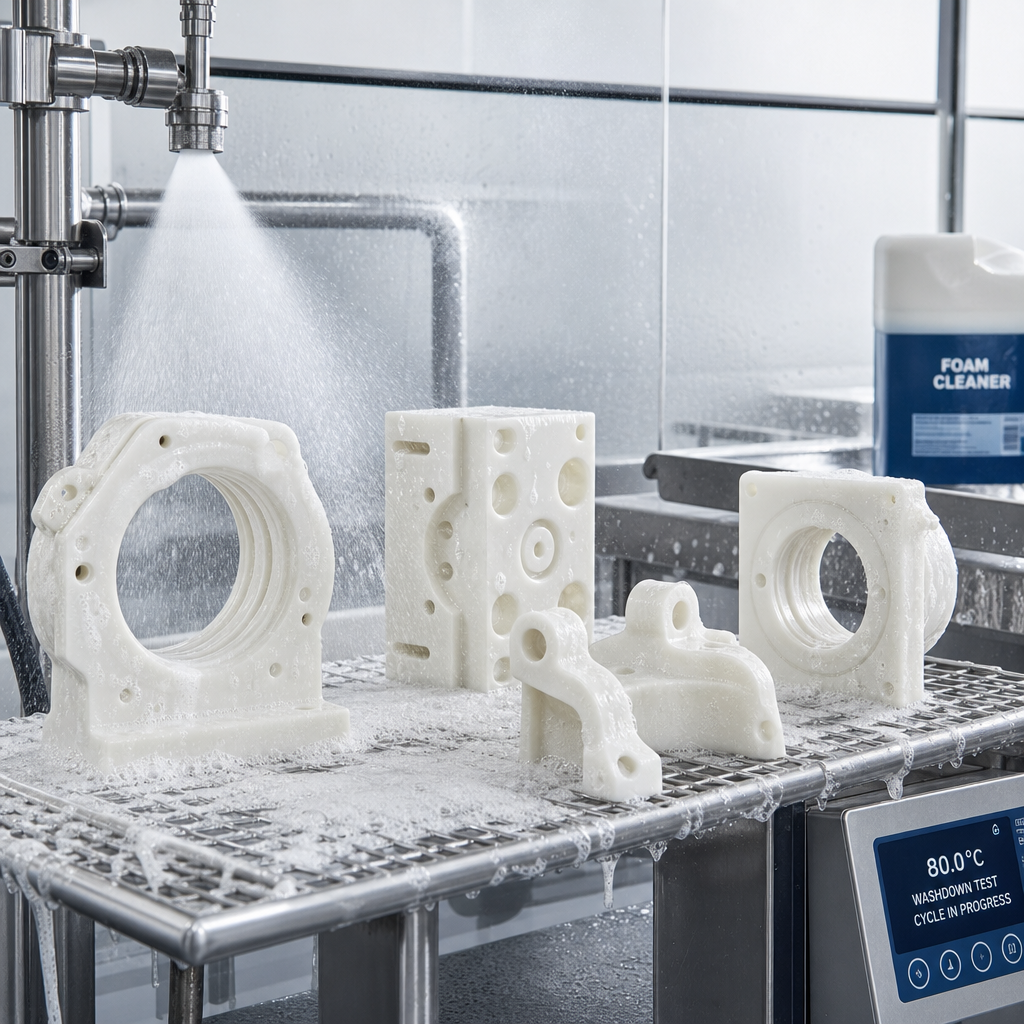
Nylon washdown chemical resistance is usually harder than it looks because sanitation combines water, heat, cleaner concentration, and repetition. A nylon part may survive one cleaning but still drift, soften, or crack after months of washdown service.
For the moisture side, review nylon hydrolysis resistance và khả năng hút ẩm của nylon. For general cleaner exposure, see our nylon cleaning chemical resistance guide.
Bottom line: if the part sees hot water or steam every day, treat nylon as a conditional choice and validate it under the real cleaning cycle.
Tổng quan
| Washdown Factor | Risk to Nylon | Tại sao |
|---|---|---|
| Hot water rinse | Trung bình | Water uptake and heat can shift properties over time. |
| Steam or very hot sanitation | Cao | Hydrolysis risk rises fast. |
| Foam cleaner | Trung bình | Concentration and dwell time matter more than the product name. |
| Caustic wash cycle | Cao | Repeated alkaline cleaning can age the part early. |
| Quick inspection wipe | Thấp | Short contact is often manageable. |
What Usually Goes Wrong
In washdown service, nylon often fails gradually. Bores tighten, clips lose repeatability, surfaces craze, or structural corners embrittle. The failure is usually a combined effect of moisture history, chemical residue, and repeated thermal cycling.
Why Washdown Service Is Harder Than It Looks
Washdown systems rarely expose the part to one clean variable. Instead, the part sees hot water, cleaner concentration swings, rinse stages, drying periods, and repeat cycles that can continue for months or years. A part that survives a bench dip test may still drift badly in production because the real service cycle is harsher and more repetitive.
That is also why nylon grades that look acceptable in general chemical charts may still create assembly problems in sanitary equipment. The risk often shows up as fit change, fatigue at clips, or loss of repeatability rather than an obvious single crack on day one.
What to Check Before Approving Nylon
- Cleaner chemistry and concentration
- Water temperature and cycle frequency
- How long the part stays wet
- Whether the part is under load during or after cleaning
- Whether low water uptake or tighter tolerance points toward PA12 or another plastic
Validation Checklist for Sanitation Cycles
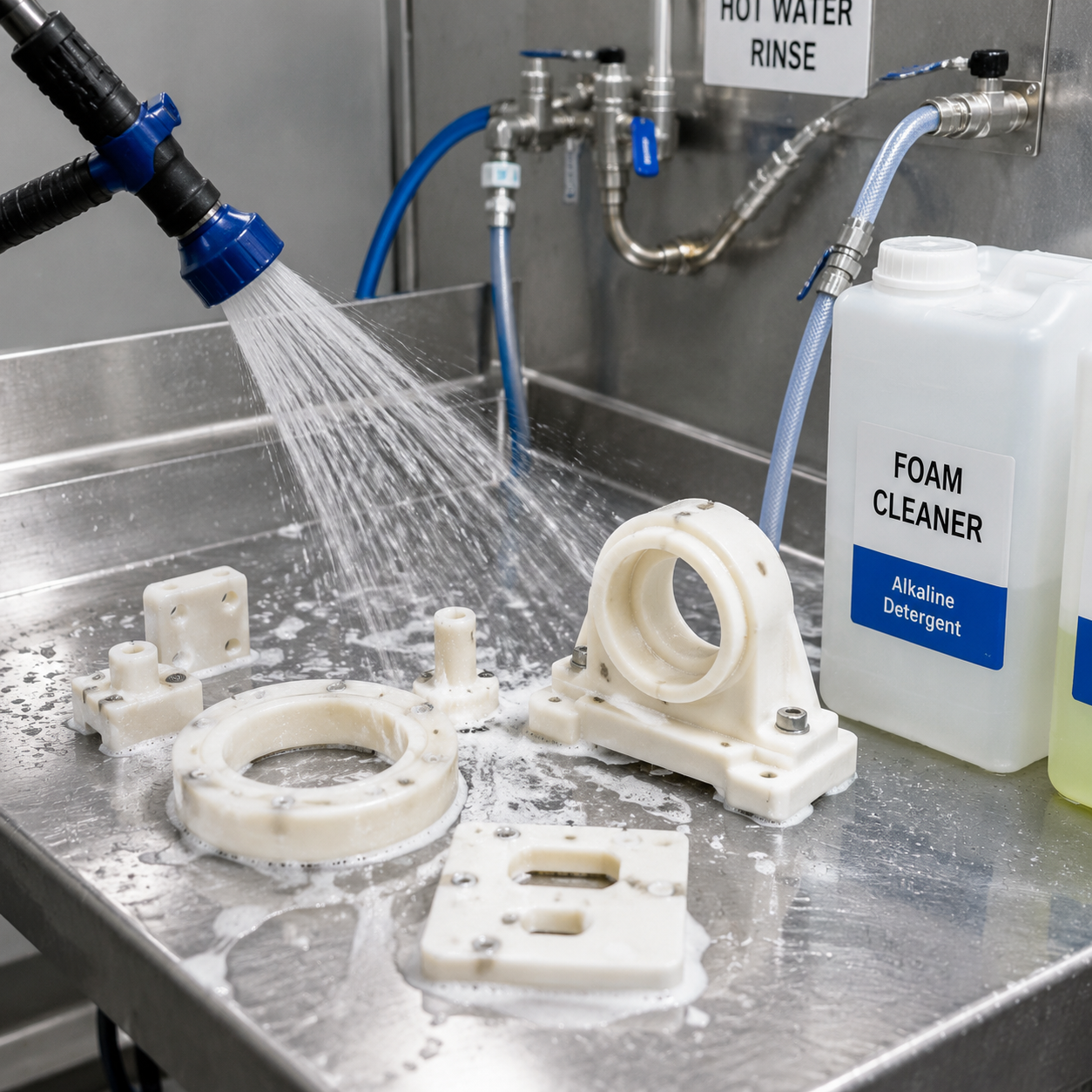
- Separate rinse, foam, dwell, and dry phases instead of averaging the whole cycle.
- Measure the part after repeated cycles, not only immediately after one wash.
- Check clips, bores, hinges, and fastener areas for tolerance drift.
- Review whether another material is safer if the part sees steam or hot caustic chemistry.
- Test the final molded geometry, because trapped moisture and local stress change the result.
Typical Application Example
A sanitary machine guide or clamp that gets daily foam wash may look fine on day one and still fail later from fit drift or clip fatigue. That is the type of part where washdown schedule and drying behavior should drive the material choice, not just the cleaner label.
Practical Rule
If the part is lightly loaded and cleaned briefly, nylon may still work well. If the system uses hot water, steam, or aggressive caustic cleaning on a repeated schedule, do not approve nylon from a room-temperature compatibility chart alone.
Bài đọc liên quan
- Nylon chemical compatibility chart
- Nylon hydrolysis resistance
- Nylon moisture absorption
- FDA-compliant plastic injection molding
Câu hỏi thường gặp
Can nylon be used in washdown environments?
Sometimes, yes. But the answer depends on temperature, cycle frequency, cleaner strength, and whether the part is dimension-critical.
Is hot water worse than the cleaner itself?
Often it can be. Hot water and repeated wet cycling can create long-term problems even when the cleaner seems mild.
Which nylon grade is safer for washdown?
PA12 is often the first grade to screen when lower moisture uptake matters, but final approval still needs testing in the real cleaning cycle.
When should I switch away from nylon?
If the part sees steam, hot caustic cleaning, or tight-tolerance movement after repeated sanitation, another plastic may be the safer starting point.
If you are moving from material screening to production, review our nylon engineering plastics page for grade options, Dịch vụ đúc phun nylon for molded parts, nylon CNC machining services for machined parts, and nylon 3D printing service for prototypes or low-volume functional parts.
Need help reviewing a washdown application?
Send the cleaning cycle, temperature, chemical, and part details. We can help judge whether nylon is still the right fit.