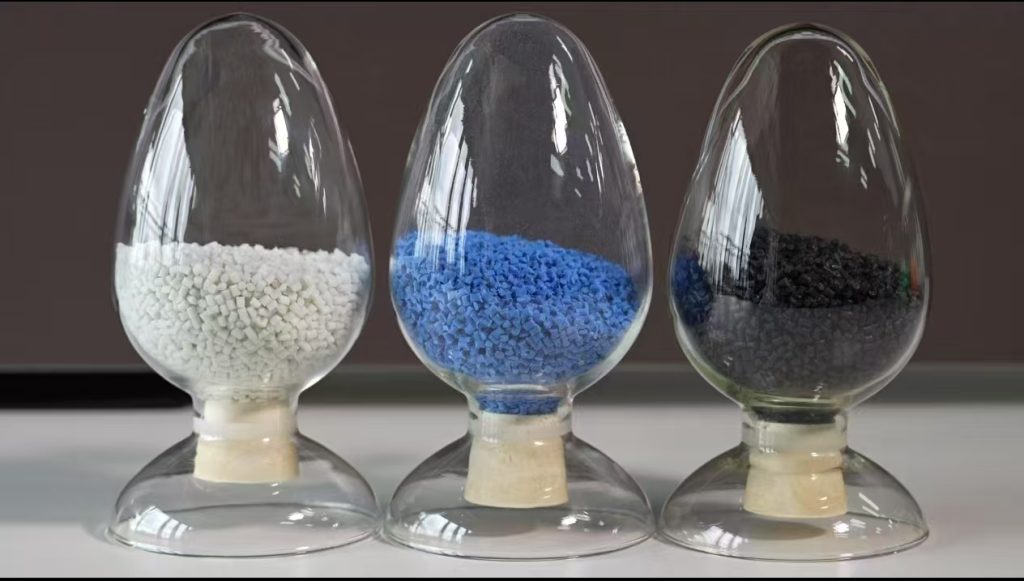
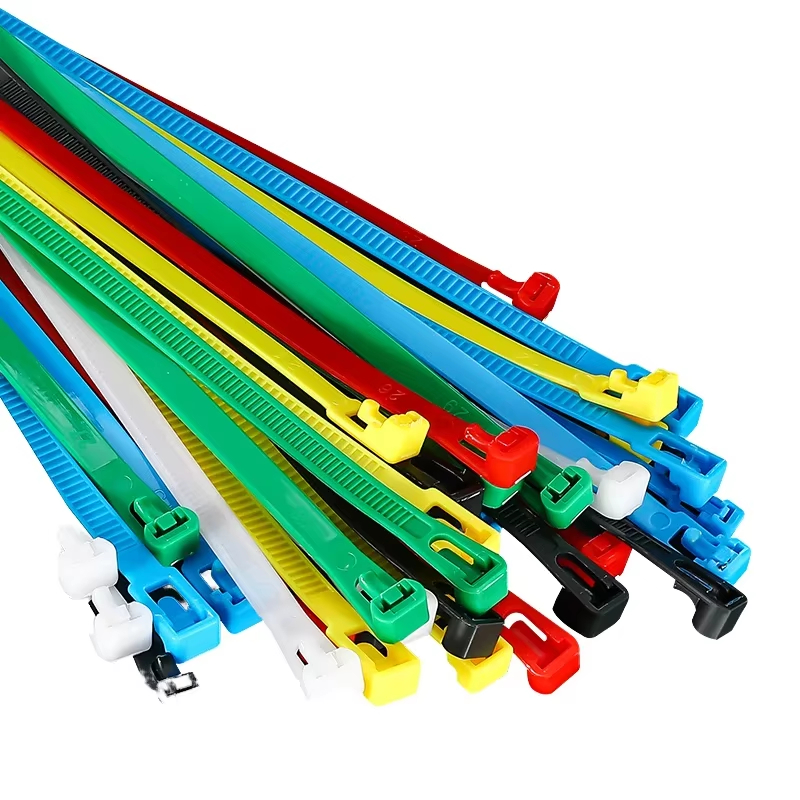
Nylon so với polypropylene: Nên chọn nylon khi chi tiết phải chịu tải trọng lớn hơn, có khả năng chống mài mòn hoặc duy trì độ cứng cần thiết ở nhiệt độ cao hơn. Nên chọn polypropylene khi các yếu tố như khả năng hấp thụ độ ẩm thấp, khả năng chống chịu rộng rãi với nhiều hóa chất dạng nước, mật độ thấp và chi phí đơn vị là những ưu tiên hàng đầu.
Không có loại vật liệu nào là lựa chọn tối ưu cho mọi trường hợp. Hãy xác định nhiệt độ làm việc, tải trọng liên tục, điều kiện tiếp xúc với chất lỏng, dung sai kích thước và khối lượng sản xuất dự kiến trước khi so sánh các loại vật liệu.

Tổng quan
| Thời điểm quyết định | Nylon | Polypropylene | Kiểm tra kỹ thuật |
|---|---|---|---|
| Tải trọng và mài mòn | Thường thì mạnh hơn | Phù hợp hơn cho các công việc nhẹ hơn | Kiểm tra độ trượt và ứng suất ổ trục |
| Độ ẩm | Hấp thụ nhiều nước hơn | Tỷ lệ tham gia rất thấp | Xác định các kích thước có điều kiện |
| Nhiệt | Thường giữ được độ cứng cao hơn | Dải nhiệt độ tải thấp hơn | Hãy so sánh loại nhựa thực tế, chứ không chỉ dựa vào nhóm nhựa |
| Tiếp xúc với hóa chất | Hoạt động tốt trong dầu và nhiều loại hydrocacbon | Thường có độ bền cao hơn khi tiếp xúc với axit, bazơ và môi trường ẩm ướt | Kiểm tra nồng độ, nhiệt độ và thời gian tiếp xúc |
| Chi phí từng bộ phận | Chi phí nhựa và chi phí gia công cao hơn | Thường thấp hơn | Bao gồm mật độ, thời gian chu kỳ và rủi ro loại bỏ |
So sánh trực tiếp các bất động sản
| Tài sản | PA66 (khô) | PA66 (đã điều chỉnh) | Homopolymer PP | Copolymer PP |
|---|---|---|---|---|
| Độ bền kéo (MPa) | 80-85 | 50-55 | 30-38 | 25-30 |
| Mô đun uốn (GPa) | 2.8-3.0 | 1.2-1.5 | 1.2-1.5 | 0.9-1.2 |
| Độ bền va đập Izod có rãnh (kJ/m²) | 4-6 | 15-25 | 3-5 | 20–40 (Lưu ý: ở 23°C) |
| HDT ở 1,82 MPa (°C) | 70-80 | — | 50-60 | 45-55 |
| Nhiệt độ sử dụng liên tục (°C) | 100-130 | — | 80-100 | 80-100 |
| Mật độ (g/cm³) | 1.14 | — | 0.90-0.91 | 0.90 |
| Khả năng hấp thụ nước (24 giờ, %) | 1.2-1.5 | — | <0.01 | <0.01 |
| Giá ($/kg, hàng rời) | 3.00-4.50 | — | 1.50-2.50 | 1.80-2.80 |

Khi nylon chiếm ưu thế: Độ bền, nhiệt độ và độ mài mòn
Nylon chiếm ưu thế trong các ứng dụng đòi hỏi khả năng chịu tải cơ học ở nhiệt độ cao. Ở 80°C, PA66 khô vẫn giữ được 60-70% độ bền kéo so với nhiệt độ phòng; trong khi đó, PP giảm xuống còn 30-40%. Đối với bánh răng, ổ trục và giá đỡ kết cấu, mô đun uốn của nylon cao hơn 2-3 lần, có nghĩa là thành mỏng hơn mà vẫn đảm bảo độ cứng tương đương — giúp giảm trọng lượng chi tiết mặc dù nylon có mật độ cao hơn PP 25%. Trong các ứng dụng chịu mài mòn (bánh răng, bề mặt trượt), nylon không chứa chất độn có giới hạn PV khoảng 0,09 MPa·m/s so với khoảng 0,03 của PP, và việc bổ sung chất bôi trơn bên trong (MoS₂, PTFE) có thể đẩy giới hạn PV của nylon lên trên 0,2 MPa·m/s.
Khi PP chiếm ưu thế: Khả năng chống hóa chất, độ ẩm và chi phí
Polypropylene hầu như không bị hút ẩm (<0,01% khi bão hòa), khiến nó trở thành lựa chọn mặc định cho các ứng dụng dưới nước, trong môi trường ẩm ướt và tiếp xúc với hóa chất. Nylon hấp thụ 2-8% độ ẩm khi bão hòa (tùy thuộc vào loại), làm mất 30-40% độ bền khô và phồng lên 0,5-1,5% về kích thước. PP cũng chịu được hầu hết các axit, bazơ và dung môi hữu cơ ở nhiệt độ phòng — trong khi nylon bị ăn mòn bởi các axit mạnh, phenol và chất oxy hóa. Trong các ứng dụng bồn chứa hóa chất, chỉ riêng khả năng chịu hóa chất của PP đã loại trừ nylon khỏi danh sách lựa chọn.
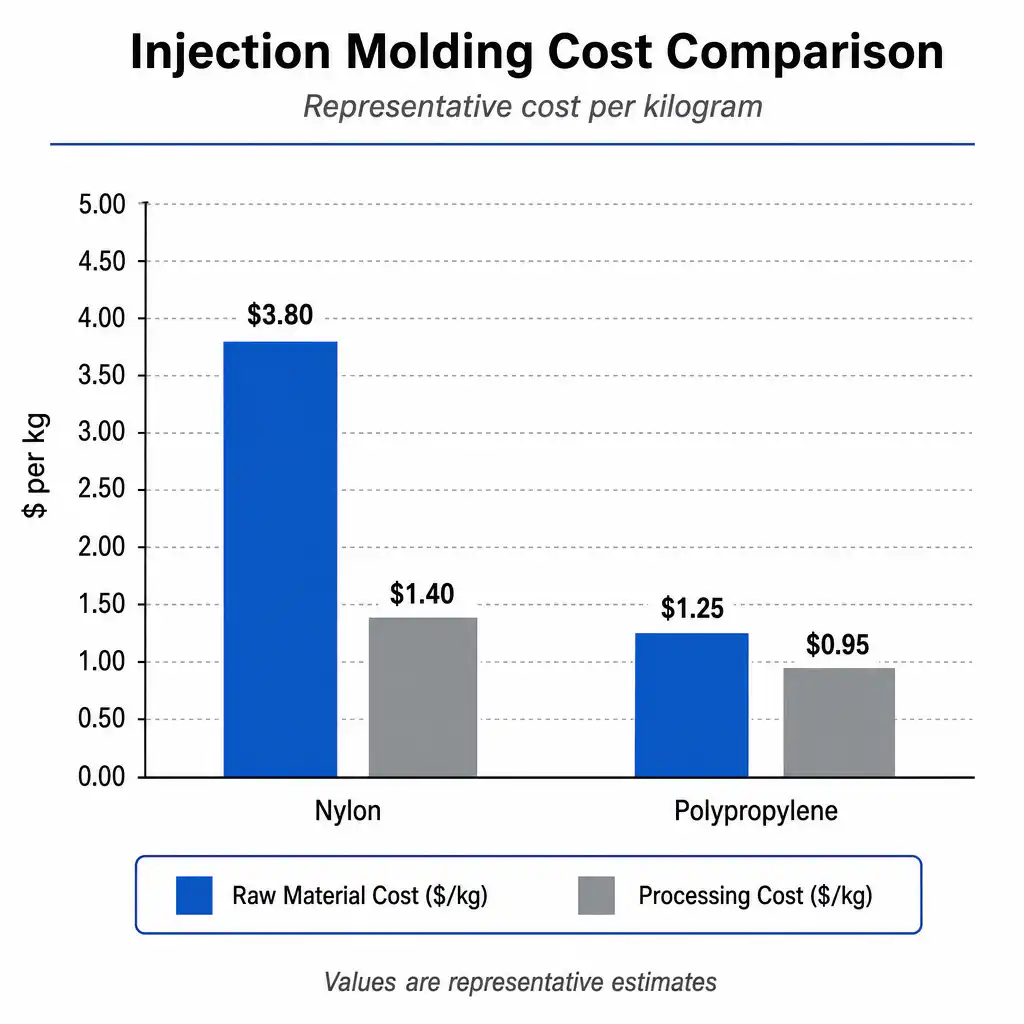
Về mặt chi phí, PP với mức giá $1,50–2,50/kg rẻ hơn PA66 (có mức giá $3,00–4,50/kg) từ 40–60%. Đối với các mặt hàng tiêu dùng sản xuất với số lượng lớn, nơi không cần độ bền vượt quá 30 MPa, chênh lệch chi phí này là yếu tố quyết định. Mật độ thấp hơn của PP (0,90 so với 1,14 g/cm³) càng làm tăng lợi thế về chi phí trên mỗi bộ phận: một bộ phận PA66 nặng 100g sẽ chỉ nặng 79g khi làm bằng PP — tức là tiết kiệm được 21% vật liệu cho mỗi bộ phận.
Các quy tắc thiết kế trong việc lựa chọn vật liệu
- Sử dụng nylon khi nhiệt độ liên tục vượt quá 80°C: Nhiệt độ biến dạng nhiệt (HDT) của PP giảm xuống còn 50–60°C khi chịu tải. Đối với khoang động cơ, dụng cụ điện hoặc bất kỳ ứng dụng nào gần nguồn nhiệt, nylon (PA66 hoặc PA6) là mức tối thiểu — có thể cần sử dụng PPA hoặc PPS khi nhiệt độ vượt quá 130°C.
- Sử dụng PP cho các môi trường ngoài trời và ẩm ướt: Các loại nhựa PP được ổn định tia UV (sử dụng muội than 2-3% hoặc chất ổn định quang học HALS) có thể chịu được nhiều năm tiếp xúc ngoài trời. Nhựa nylon cần được ổn định tia UV nhưng chất lượng bề mặt vẫn sẽ suy giảm nhanh hơn. Đối với các bộ phận ngâm trong nước hoặc ở môi trường có độ ẩm cao, đặc tính không hấp thụ độ ẩm của PP giúp loại bỏ hiện tượng biến dạng kích thước.
- Thực hiện so sánh chi phí đã điều chỉnh theo mật độ: Chi phí nguyên liệu trên mỗi chi tiết = (thể tích chi tiết tính bằng cm³) × (mật độ tính bằng g/cm³) × (giá nhựa $/kg) ÷ 1000. Một chi tiết PP có giá $2/kg × mật độ 0,90 có chi phí vật liệu là $1,80/L; PA66 với giá $4/kg × mật độ 1,14 có chi phí vật liệu là $4,56/L — sự chênh lệch gấp 2,5 lần khiến các nhà thiết kế ngạc nhiên khi so sánh giá trên mỗi kg.
- Hãy xem xét các loại nhựa gia cường sợi thủy tinh như một giải pháp trung gian: PP-GF30 đạt độ bền kéo từ 70 đến 90 MPa — gần bằng mức 80 MPa của PA66 khô — với hàm lượng khoảng $2.50-3.50/kg. GFPP không thể sánh ngang với khả năng chịu nhiệt của nylon, nhưng đã thu hẹp đáng kể khoảng cách về độ bền đối với các bộ phận kết cấu hoạt động ở nhiệt độ môi trường.
- Bản lề linh hoạt: Chỉ dành cho PP: Sự kết hợp độc đáo giữa khả năng chống mỏi cao và mô-đun đàn hồi thấp của polypropylene khiến nó trở thành loại nhựa thông dụng duy nhất có thể tạo ra các bản lề linh hoạt một cách đáng tin cậy, chịu được hơn 10⁶ chu kỳ uốn. Các bản lề linh hoạt làm từ nylon thường bị hỏng chỉ sau vài trăm chu kỳ do tính nhạy cảm với vết khía và độ cứng cao hơn.
- Kiểm tra tính tương thích hóa học dựa trên danh sách tiếp xúc đầy đủ của bạn: Nylon bị hư hỏng khi tiếp xúc với: các axit mạnh (HCl, H₂SO₄), phenol, hydrocacbon thơm và dung dịch clorua kẽm. PP bị hư hỏng khi tiếp xúc với: các chất oxy hóa mạnh (axit nitric đậm đặc, halogen) và bị phồng lên khi tiếp xúc với hydrocacbon thơm/clorua. Hãy thử nghiệm với các hóa chất thực tế trong quy trình sản xuất của bạn, không chỉ dựa vào bảng dữ liệu kỹ thuật.
Ma trận ứng dụng trong ngành
| Ngành công nghiệp | Các bộ phận thông dụng | Chất liệu/Loại | Yêu cầu chính |
|---|---|---|---|
| Phần dưới nắp ca-pô ô tô | Nắp động cơ, ống nạp, bình tản nhiệt | PA66-GF30 | PPA hoặc PA66 (HDT >200°C) |
| Bao bì tiêu dùng | Hộp đựng thực phẩm, nắp, bộ phận đóng nắp | PP đồng trùng hợp/copolymer | Chi phí <$2/kg + chứng nhận an toàn khi tiếp xúc với thực phẩm |
| Dụng cụ điện | Vỏ máy, hộp số, cánh quạt | PA6-GF30 | Tác động ở nhiệt độ -20°C + nhiệt tỏa ra từ động cơ |
| Chế biến hóa học | Bồn chứa, phụ kiện, vỏ bơm | PP đồng nhất hoặc PP-GF20 | Khả năng chịu hóa chất trong khoảng pH từ 1 đến 14 |

Khung quyết định về chi phí
Nguyên liệu thô: PP là $1,50–2,80/kg; PA66 là $3,00–4,50/kg; PA6 là $2,50–3,50/kg. Chênh lệch giá càng lớn đối với các loại nhựa chuyên dụng — PP chứa sợi thủy tinh tăng thêm $0,50–1,00/kg; nylon chứa sợi thủy tinh tăng thêm $1,00–2,00/kg so với loại cơ bản không chứa sợi thủy tinh.
Chi phí xử lý: PP có chu kỳ 10-20% nhanh hơn nylon (độ nhớt nóng chảy thấp hơn, tốc độ làm mát nhanh hơn). Đối với một chi tiết nặng 50g, việc sử dụng PP với chu kỳ 20 giây so với nylon với chu kỳ 24 giây giúp tiết kiệm khoảng $0,02/chi tiết về thời gian máy ở tốc độ $30/giờ. Với hơn một triệu chi tiết, con số này tương đương $20.000 chỉ tính riêng thời gian chu kỳ.
Cân nhắc về chi phí do sự cố: Nếu một chi tiết làm từ nylon hấp thụ độ ẩm và phồng lên đến mức vượt quá dung sai, chi phí sửa chữa sẽ cao gấp nhiều lần so với khoản tiết kiệm từ vật liệu. Ngược lại, nếu một chi tiết làm từ PP bị biến dạng do tải trọng liên tục và sản phẩm bị hỏng khi đang sử dụng, chi phí bảo hành sẽ khiến mức chênh lệch giá của nylon trở nên rẻ mạt. Hãy lựa chọn dựa trên chế độ hỏng hóc chủ yếu của ứng dụng, chứ không chỉ dựa vào giá mỗi kg.
Các khuyết tật thường gặp theo loại vật liệu
| Lỗi | Hình thức | Nguyên nhân gốc rễ | Giải pháp |
|---|---|---|---|
| Biến dạng / méo mó | Các bộ phận bị cong hoặc xoắn sau khi tháo khuôn | Làm mát không đồng đều; co ngót dị hướng | Tối ưu hóa bố trí hệ thống làm mát; kiểm tra tính đồng đều của độ dày thành <15% |
| Hư hỏng do giòn | Các chi tiết bị gãy mà không có hiện tượng biến dạng dẻo | Nylon: sản phẩm đúc quá khô. PP: bị phân hủy do tia UV/nhiệt | Nylon: Độ ẩm từ 1,5 đến 2,51 TP3T. PP: Thêm chất ổn định tia UV |
| Tách lớp bề mặt | Tẩy da chết theo từng lớp | Ô nhiễm; bột nhựa tái chế không tương thích; cặn chất tách khuôn tích tụ | Xả sạch thùng; hạn chế lượng nguyên liệu tái nghiền ở mức <20%; làm sạch bề mặt khuôn |
| Độ trượt / độ biến dạng vĩnh viễn | Bộ phận bị biến dạng khi chịu tải trọng liên tục | Mô-đun không đủ cho mức tải | Chuyển sang loại GF; thêm các đường gân; chỉ định mô-đun trượt, không phải mô-đun ngắn hạn |
Danh sách kiểm tra dành cho người mua trước khi chọn loại sản phẩm
- Ghi lại nhiệt độ hoạt động liên tục và nhiệt độ hoạt động cao nhất.
- Phân biệt tải trọng kết cấu liên tục với tải trọng va đập không thường xuyên.
- Liệt kê tất cả các hóa chất, chất tẩy rửa, dầu mỡ và điều kiện độ ẩm mà bộ phận này sẽ phải tiếp xúc.
- Xác định xem các kích thước được áp dụng ở trạng thái khô như khi đúc hay sau khi điều chỉnh.
- Hãy so sánh chi phí của các chi tiết đúc, chứ không chỉ riêng giá nhựa.
Tại sao nên chọn nhựa nylon cho dự án của bạn?
Sản xuất chính xác
Hơn 30 dây chuyền gia công CNC và ép phun tập trung tại cùng một địa điểm
Đạt chứng nhận ISO 9001:2015
Hệ thống quản lý chất lượng được chứng nhận, báo cáo kiểm tra đầy đủ
Thời gian giao hàng từ 15 đến 25 ngày
Thời gian hoàn thành nhanh chóng, có các tùy chọn xử lý khẩn cấp
Vận chuyển toàn cầu
Vận chuyển hàng hóa bằng đường hàng không và đường biển đến Bắc Mỹ, châu Âu, châu Á
Tải xuống Cẩm nang so sánh giữa nylon và polypropylene của chúng tôi
Tài liệu tham khảo PDF miễn phí bao gồm dữ liệu kỹ thuật, các quy tắc thiết kế và danh sách kiểm tra nhà cung cấp.
📥 Tải xuống Hướng dẫn lựa chọn giữa nylon và polypropylene (PDF)
Các bài viết liên quan
Câu hỏi thường gặp
Chất liệu nào bền hơn — nylon hay polypropylene?
Nylon (PA66) có độ bền cao hơn polypropylene khoảng 2-3 lần. PA66 ở trạng thái khô có độ bền kéo từ 80-85 MPa, trong khi đó, homopolymer PP chỉ đạt 30-38 MPa. Tuy nhiên, nylon đã qua xử lý (ở điều kiện cân bằng độ ẩm 50%) giảm xuống còn 50-55 MPa — vẫn mạnh hơn PP khoảng 50%. Về độ cứng, mô đun uốn của nylon là 2,8-3,0 GPa (khi khô), gấp khoảng hai lần so với 1,2-1,5 GPa của PP. Khoảng cách về độ bền thu hẹp đáng kể khi so sánh các loại nhựa có chứa sợi thủy tinh: PP-GF30 đạt 70–90 MPa, gần bằng độ bền của PA66 khô không chứa chất độn.
Chất liệu nào có khả năng chống hóa chất tốt hơn — nylon hay PP?
Polypropylene có khả năng chịu hóa chất tốt hơn nhiều. PP chịu được hầu hết các axit, bazơ, cồn và dung dịch nước ở nhiệt độ phòng đến 80°C. Nylon bị ăn mòn bởi các axit mạnh (HCl, H₂SO₄), phenol, hydrocacbon thơm, nước nóng (>80°C gây thủy phân) và các chất oxy hóa. Đối với việc lưu trữ hóa chất, thiết bị chế biến và các ứng dụng trong phòng thí nghiệm, PP hầu như luôn là lựa chọn tốt hơn. Ngoại lệ: nylon có khả năng chống lại hydrocacbon (xăng, dầu, mỡ) tốt hơn PP, vốn bị phồng lên khi tiếp xúc với hydrocacbon thơm và hydrocacbon clo hóa.
Nylon hay PP thì phù hợp hơn để sử dụng ngoài trời?
Cả hai loại này đều không lý tưởng ở dạng thô — cả hai đều bị phân hủy dưới tác động của tia UV. PP được ổn định tia UV (với phụ gia muội than 2% hoặc HALS) có khả năng chịu thời tiết tốt hơn so với nylon được ổn định tia UV và chi phí thấp hơn. PP không hấp thụ nước, do đó loại bỏ được hư hỏng do đóng băng-tan băng — hiện tượng có thể gây nứt vỡ nylon đã bão hòa độ ẩm. Đối với các ứng dụng kết cấu ngoài trời lâu dài ở nhiệt độ trên 80°C, nylon được ổn định tia UV có bổ sung sợi thủy tinh là lựa chọn tốt hơn dù có hạn chế về khả năng chịu thời tiết, bởi vì PP sẽ mất tính toàn vẹn cơ học khi nhiệt độ tiếp cận điểm HDT của nó.
Tại sao nylon lại đắt hơn polypropylene?
Nylon có giá cao hơn vì: (1) Quá trình sản xuất monome thô (axit adipic + hexamethylene diamine đối với PA66; caprolactam đối với PA6) bao gồm nhiều công đoạn hóa dầu, trong khi quá trình sản xuất PP chỉ là quá trình trùng hợp propylene một bước. (2) Năng lượng gia công cao hơn — nylon được đúc ở nhiệt độ 260-300°C so với PP ở 200-240°C. (3) Mật độ cao hơn (1,14 so với 0,90 g/cm³) có nghĩa là cần nhiều vật liệu hơn về trọng lượng (27%) cho cùng một thể tích chi tiết. Chi phí cao hơn mang lại độ bền, khả năng chịu nhiệt và tính chống mài mòn cao hơn — rất có giá trị trong các ứng dụng kỹ thuật nhưng lại gây lãng phí trong các hộp đựng đơn giản hoặc hàng tiêu dùng chịu lực thấp.
Yêu cầu rà soát tài liệu
Vui lòng gửi bản vẽ, sản lượng hàng năm, nhiệt độ làm việc, tải trọng và môi trường tiếp xúc với chất lỏng. Chúng tôi có thể so sánh các loại nylon và polypropylene phù hợp trước khi chế tạo khuôn hoặc đưa vào sản xuất.