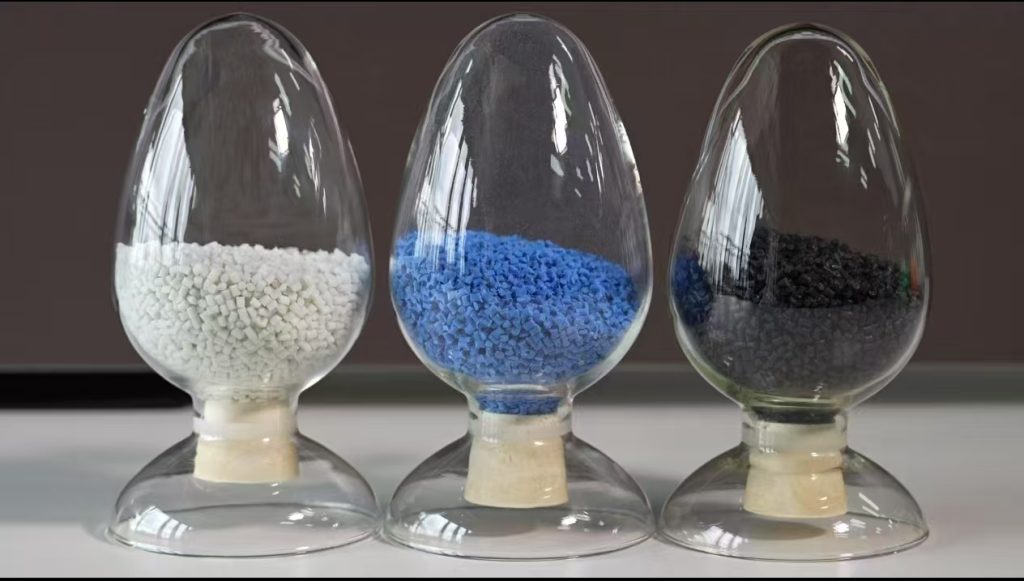
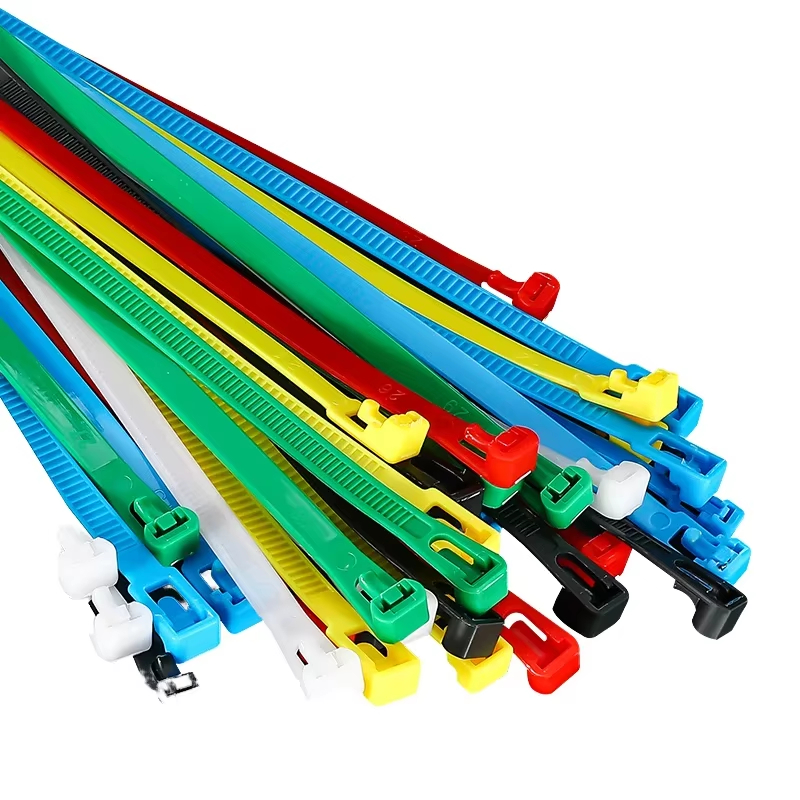
Nylon chemical resistance in automotive fluids is usually good for oils and some fuel-adjacent fluids, but coolant, brake fluid, and long hot service need much more care. In under-hood parts, chemistry and heat fail together.
For the fuel side, see our nylon fuel resistance guide. For hot water and moisture aging, also review nylon hydrolysis resistance.
Bottom line: engine oil and ATF are often manageable starting points, but coolant, brake fluid, and hot under-hood cycling require a real validation plan instead of a generic nylon answer.
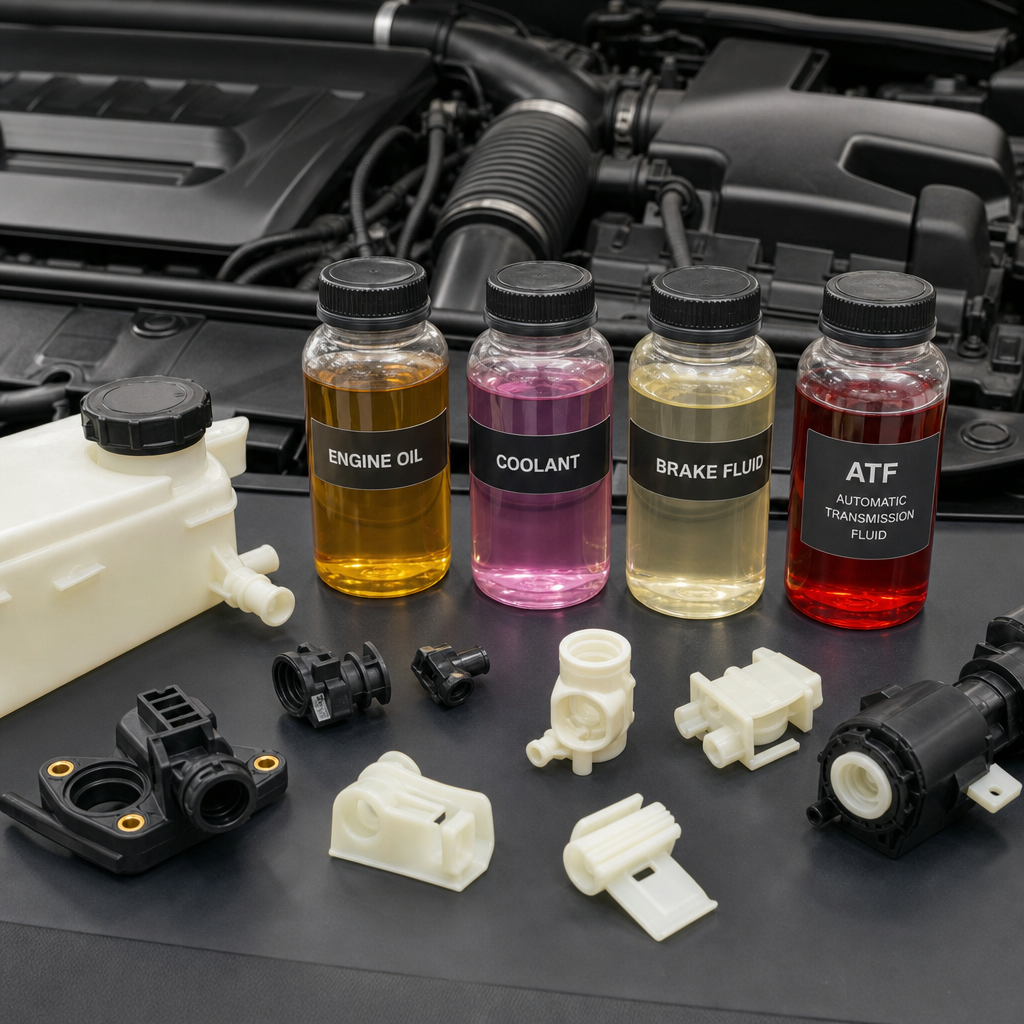
Tổng quan
| Fluid | Nylon | Risk Level | Practical Note |
|---|---|---|---|
| Engine oil | Thường thì tốt | Low to medium | Check temperature, additives, and load. |
| ATF / transmission fluid | Thường thì tốt | Trung bình | Long dwell and heat still matter. |
| Coolant / ethylene glycol mix | Caution | Medium to high | Hot water and hydrolysis can dominate. |
| Brake fluid | Needs review | Cao | Do not assume the fluid is safe for nylon. |
| DEF / urea solution | Needs review | Medium to high | Grade and temperature matter a lot. |
| Washer fluid | Often fair | Low to medium | Watch IPA blend, stress, and seals. |
What Usually Decides the Part
Automotive plastics fail in a stack, not a single event. Heat raises chemical attack. Stress makes small swelling into cracking. Long exposure turns a good short-term result into a bad production part.
Fluid-by-Fluid Engineering Notes
Engine oil and ATF are often manageable for nylon, but additives and continuous heat can still change the result. Chất làm mát is less about the glycol label and more about hot-water aging over time. Brake fluid should be treated as a validation case, not a default green light, because the fluid chemistry and safety margin are less forgiving.
That is why the same nylon grade may look fine in one under-hood bracket and fail early in a connector, clip, or reservoir-adjacent part. Wall thickness, clamp load, and residual molding stress all change how the fluid risk shows up.
Selection Notes
- Use PA12 first when moisture control and fluid stability both matter.
- Use PA66 first when stiffness and heat are more important than low water uptake.
- Do not choose by resin name alone if the part sits near the engine, radiator, or brake system.
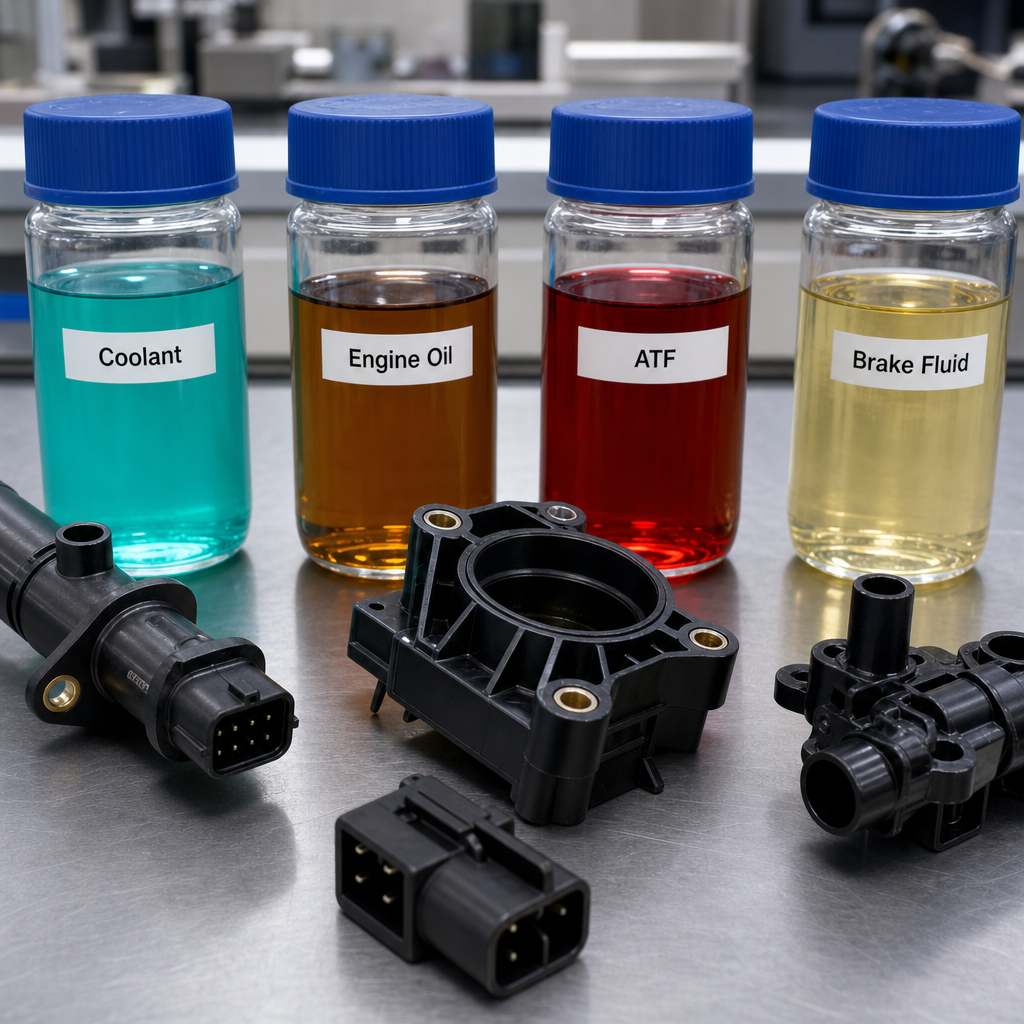
Validation Checklist Before Release
- Identify the exact fluid, additive package, and service temperature window.
- Separate short-term splash contact from permanent or cyclic exposure.
- Check whether the part is loaded, sealed, clipped, or torque-bearing in service.
- Condition samples the way the part will actually age under the hood.
- Review whether PA12, stabilized PA66, or another engineering plastic belongs in the first shortlist.
Typical Application Example
A reservoir clip or connector next to coolant tubing should be judged differently from a cosmetic cover. The clip sees load, heat, assembly stress, and long exposure, so a material that looks acceptable on paper can still become the wrong choice after a few thermal cycles.
Bài đọc liên quan
- Nylon chemical compatibility chart
- Nylon chemical resistance guide
- Nylon hydrolysis resistance
- Nylon for automotive applications
Temperature Is the Amplifier: How Heat Changes Fluid Attack
Most nylon automotive fluid test data is generated at room temperature, but under-hood reality is different. At 80°C, chemical diffusion rates into nylon can be 3 to 5 times faster than at 23°C. At 120°C, the combination of fluid penetration plus accelerated hydrolysis can degrade nylon mechanical properties by 30 to 50 percent within weeks. This means a material that passes a 500-hour room-temperature immersion test can still fail after 100 hours at actual service temperature. Teams should always baseline their fluid compatibility tests at the upper end of the part’s expected service temperature window, not at ambient lab conditions.
Stress State Changes the Answer: Loaded vs Unloaded Exposure
An unloaded test coupon in fluid tells only part of the story. When nylon parts carry clamp loads, bolt torque, or snap-fit preload while exposed to automotive fluids, environmental stress cracking (ESC) becomes the dominant failure mode. A connector housing under continuous spring force in a hot coolant environment can crack weeks before an unstressed sample shows any visual change. The practical rule: if the part is load-bearing in service, the fluid compatibility test must include that load. A simple immersion test without representative stress is insufficient for production release.
Multi-Fluid Exposure: When the Part Sees More Than One Chemical
Under-hood parts rarely see a single fluid in isolation. A bracket near the engine may catch oil spray, coolant seepage, and road salt mist in sequence. Nylon that survives each fluid individually can fail when exposures combine, because absorbed oil can plasticize the polymer and make it more permeable to coolant or water. Sequential or mixed-fluid testing is more expensive but often necessary for parts near multiple fluid systems. At minimum, document every fluid the part may contact during its service life before selecting a grade.
Câu hỏi thường gặp
Is nylon resistant to engine oil?
Often yes, but the exact oil package, temperature, and part stress still need to be checked.
Can nylon be used with coolant?
Sometimes, but coolant brings hot water and long-term aging into the picture, so the part should be reviewed as a full system.
Is brake fluid safe for nylon?
Not by default. Brake fluid should be treated as a high-risk case that needs grade-specific validation.
Which nylon grade is safest for under-hood parts?
There is no universal answer, but PA12 and stabilized PA66 are often the first grades to screen depending on the load and temperature.
If you are moving from material screening to production, review our nylon engineering plastics page for grade options, Dịch vụ đúc phun nylon for molded parts, nylon CNC machining services for machined parts, and nylon 3D printing service for prototypes or low-volume functional parts.
Need an under-hood material review?
Send the fluid, temperature, load, and target part. We can help narrow the nylon grade before release.