
Cắt bằng laser: Nguyên lý hoạt động
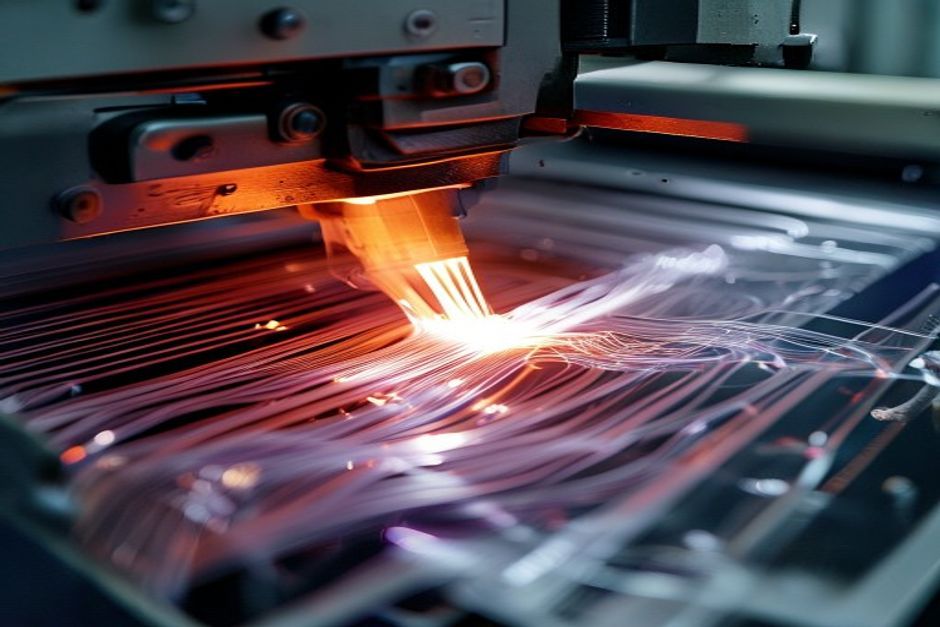
Các hệ thống cắt laser tập trung chùm tia laser công suất cao (CO₂, sợi quang hoặc Nd:YAG) qua hệ thống quang học và gương phản xạ vào một điểm tiêu có đường kính từ 50 đến 200 micron. Mật độ năng lượng tập trung — thường vượt quá 10 triệu watt trên mỗi centimet vuông — làm nóng vật liệu nhanh chóng đến điểm nóng chảy hoặc bay hơi. Một luồng khí hỗ trợ đồng trục (oxy, nitơ hoặc khí nén) thổi vật liệu nóng chảy qua vết cắt, tạo ra một vết cắt mịn.
Các loại cắt bằng laser
- Laser CO₂ (bước sóng 10,6 µm): Phù hợp nhất với các vật liệu phi kim loại — gỗ, acrylic, nhựa, vải, cao su. Cũng có thể cắt kim loại mỏng nhưng cần công suất cao hơn. Được sử dụng rộng rãi trong các xưởng gia công và sản xuất biển hiệu.
- Laser sợi quang (bước sóng 1,06 µm): Hiệu quả vượt trội trong gia công kim loại — thép, nhôm, đồng thau, đồng. Hiệu suất cắm tường cao hơn so với CO₂ (30% so với 10%). Tốc độ cắt nhanh hơn trên các loại kim loại có độ dày từ mỏng đến trung bình. Không cần điều chỉnh gương; chi phí bảo trì thấp hơn.
- Laser Nd:YAG: Chủ yếu được sử dụng trong các ứng dụng hàn, khắc và gia công vi mô chuyên dụng.
So sánh trực tiếp
| Yếu tố | Cắt bằng laser | Chế tạo CNC |
|---|---|---|
| Loại quy trình | Nhiệt (không tiếp xúc) | Cơ khí (tiếp xúc) |
| Khả năng xử lý vật liệu | Chủ yếu là tạo hồ sơ 2D | 3D toàn phần |
| Vật liệu (Kim loại) | Tối đa 1 inch (thép), 0,5 inch (nhôm) | Độ dày không giới hạn (nhiều lần gia công) |
| Vật liệu (Nhựa) | Có thể cắt được nhưng có thể bị đổi màu hoặc chảy ra | Tuyệt vời — vết cắt gọn gàng, không có tác động nhiệt |
| Dung sai | ±0,003–0,010 inch | ±0,0005–0,002 inch |
| Chiều rộng rãnh cắt | 0,004–0,020 inch | Đường kính dụng cụ (0,031+) |
| Vùng chịu ảnh hưởng của nhiệt | Hiện tại — 0,004–0,020 inch | Tối thiểu (chỉ do ma sát sinh nhiệt) |
| Chi phí vận hành | Thấp (tiêu hao tối thiểu) | Trung bình (dụng cụ gia công, dung dịch làm mát) |

Các yếu tố cần lưu ý tùy theo loại vật liệu
Kim loại
Cắt laser là quy trình được ưa chuộng nhất để gia công các chi tiết từ tấm kim loại mỏng đến trung bình (thép dày 0,020–1,0 inch, nhôm dày 0,020–0,5 inch). Phương pháp này thường nhanh hơn gia công CNC đối với các chi tiết 2D và tạo ra ít phế liệu hơn. Tuy nhiên, các mép cắt bằng laser có vùng chịu ảnh hưởng nhiệt (HAZ), do đó có thể cần phải xử lý sau khi cắt đối với các chi tiết trong ngành hàng không vũ trụ hoặc y tế, nơi độ bền mỏi là yếu tố quan trọng.
Nhựa
Gia công CNC được ưu tiên hàng đầu đối với các loại nhựa kỹ thuật. Cắt laser gây ra các tác động nhiệt trên nhựa — như nóng chảy, đổi màu, khói độc và biến dạng kích thước — những điều mà gia công CNC hoàn toàn tránh được. Các vật liệu như Nylon, POM (acetal), PEEK và polycarbonate có thể được gia công một cách sạch sẽ với tốc độ và bước tiến phù hợp. Đối với các chi tiết nhựa kỹ thuật yêu cầu các đặc điểm 3D hoặc dung sai chặt chẽ, gia công CNC là lựa chọn rõ ràng.
Gỗ và vật liệu composite
Cắt bằng laser đặc biệt hiệu quả đối với gỗ, ván ép và MDF — những vật liệu có thể làm cùn dụng cụ cắt CNC. Tia laser tạo ra các mép cắt gọn gàng, màu sẫm và không để lại vết dụng cụ. Đối với vật liệu composite sợi carbon, cả hai quy trình đều có thể áp dụng: máy cắt laser sợi quang cắt mà không gây hiện tượng bong lớp thường gặp trong gia công phay cơ khí, nhưng gia công phay CNC được ưa chuộng hơn đối với các tấm laminate dày (trên 0,25 inch).
Lựa chọn giữa cắt laser và gia công CNC
- Hãy chọn cắt laser cho: Các chi tiết kim loại tấm 2D, vỏ bọc và tấm ốp, vật liệu mỏng có đường viền phức tạp, vật liệu phi kim loại (gỗ, acrylic, vải), sản xuất kim loại tấm với số lượng lớn trong đó tốc độ là yếu tố quyết định
- Hãy chọn gia công CNC cho: Các chi tiết 3D có hốc, lỗ và các bề mặt bậc thang, các chi tiết nhựa (không bị phân hủy nhiệt), các chi tiết kim loại hoặc nhựa có dung sai chặt (±0,001 inch), vật liệu dày (trên 1 inch đối với kim loại), lỗ ren và lỗ được khoan mở rộng
- Hãy xem xét cả hai yếu tố này cùng nhau: Dùng máy cắt laser để cắt hình dạng 2D từ tấm vật liệu, sau đó gia công các chi tiết 3D bằng máy CNC trong công đoạn tiếp theo
Câu hỏi thường gặp
Khi nào thì bài viết “Cắt laser so với gia công CNC: So sánh quy trình toàn diện” là lựa chọn phù hợp?
“Cắt laser so với gia công CNC: So sánh quy trình toàn diện” là lựa chọn phù hợp khi chi tiết yêu cầu độ chính xác gia công cao, bề mặt được kiểm soát, các đặc tính lặp lại và vật liệu có thể được cắt một cách đáng tin cậy.
Cần xác nhận những điều gì trước khi đặt hàng bài viết “Cắt laser so với gia công CNC: So sánh quy trình toàn diện”?
Xác nhận phiên bản bản vẽ, loại vật liệu, dung sai, số lượng, kích thước quan trọng, độ nhám bề mặt và các yêu cầu kiểm tra trước khi bắt đầu sản xuất.
Yếu tố nào thường quyết định chi phí khi so sánh giữa cắt laser và gia công CNC: So sánh toàn diện các quy trình?
Chi phí thường phụ thuộc vào nguyên vật liệu, thời gian chuẩn bị, thời gian vận hành máy, độ phức tạp của dung sai, thiết bị kẹp giữ, khả năng tiếp cận dụng cụ, công đoạn hoàn thiện, kiểm tra và số lượng đơn hàng.
Làm thế nào để giảm thiểu rủi ro về chất lượng khi so sánh giữa cắt laser và gia công CNC: So sánh quy trình toàn diện?
Rủi ro về chất lượng được giảm thiểu bằng cách đánh dấu rõ ràng các đặc điểm quan trọng, tránh các dung sai quá chặt chẽ không cần thiết, xác nhận khả năng sản xuất từ sớm và sử dụng dữ liệu kiểm tra cho các kích thước quan trọng.