Các khuyết tật thường gặp trong quá trình ép phun
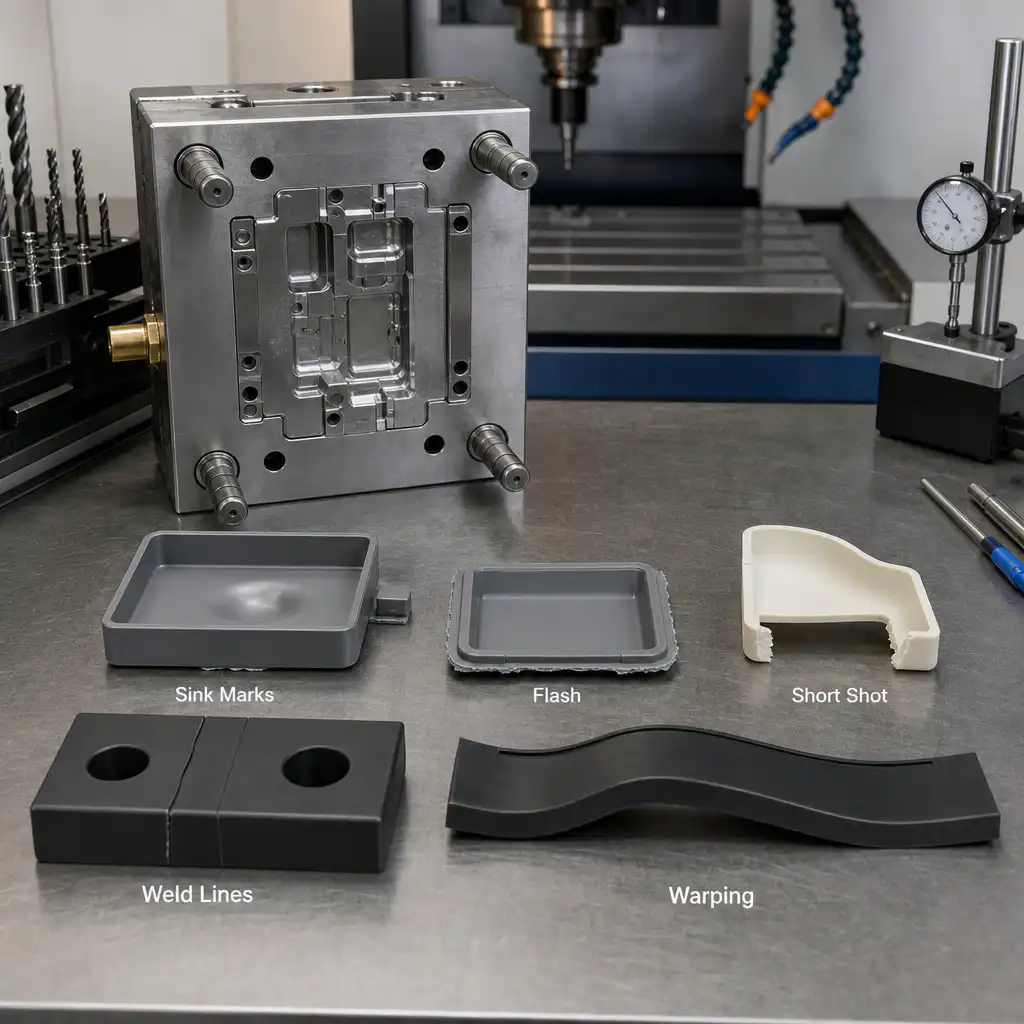
Các khuyết tật trong quá trình ép phun có thể ảnh hưởng đến hình thức, chức năng và chi phí của chi tiết. Việc nắm rõ nguyên nhân gốc rễ giúp khắc phục sự cố và phòng ngừa một cách nhanh chóng.
1. Vết lõm trên bồn rửa
Hình thức: Các vết lõm trên bề mặt chi tiết, thường xuất hiện gần các phần dày.
Nguyên nhân:
- Sự dao động quá mức về độ dày thành
- Các thanh dầm quá dày so với thành tường
- Thời gian làm mát không đủ
- Cần áp suất đóng gói cao
Giải pháp:
- Giảm độ dày của thanh dọc xuống còn 50-70% so với độ dày thành
- Tăng thời gian làm mát
- Tối ưu hóa áp suất và thời gian đóng gói
- Sử dụng phương pháp đúc có hỗ trợ khí cho các phần có độ dày lớn
2. Flash
Hình thức: Cắt bớt phần nhựa thừa tại các đường phân chia hoặc xung quanh các chi tiết.
Nguyên nhân:
- Lực kẹp không đủ
- Các bộ phận khuôn bị mòn
- Áp suất phun quá cao
- Sự căn chỉnh khuôn không chính xác
Giải pháp:
- Tăng lực kẹp
- Sửa chữa hoặc thay thế các bộ phận bị mòn
- Giảm áp suất phun
- Kiểm tra độ thẳng hàng của khuôn và các chốt dẫn hướng
3. Những cú sút ngắn
4. Hiện tượng cong vênh
Hình thức: Sự biến dạng của chi tiết sau khi được đẩy ra.
Nguyên nhân:
- Làm mát không đồng đều
- Thiết kế chi tiết không đối xứng
- Thời điểm đẩy ra không chính xác
- Sự biến động về độ co ngót của vật liệu
Giải pháp:
- Tối ưu hóa thiết kế kênh làm mát
- Độ dày thành cân bằng
- Điều chỉnh thời điểm xả
- Sử dụng vật liệu có độ co ngót thấp hơn
5. Đường hàn
Hình thức: Các đường rõ ràng tại điểm giao nhau của các mặt sóng dòng chảy.
Nguyên nhân:
- Nhiều cổng hoặc mặt sóng
- Các lỗ hoặc miếng lót gây ra hiện tượng phân tách dòng chảy
- Tốc độ phun thấp
- Vật liệu lạnh tại điểm gặp gỡ
Giải pháp:
- Di chuyển các đường hàn sang các khu vực không quan trọng
- Tăng tốc độ phun
- Tăng nhiệt độ khuôn
- Lắp đặt các giếng tràn tại các vị trí hàn
Danh sách kiểm tra phòng ngừa lỗi
- Thiết kế các chi tiết có độ dày thành đồng nhất
- Đảm bảo có các góc nghiêng thích hợp
- Đảm bảo thông gió đầy đủ
- Tối ưu hóa vị trí cổng
- Đảm bảo hệ thống làm mát hoạt động cân bằng
Kết luận
Hầu hết các khuyết tật trong quá trình ép phun đều xuất phát từ các vấn đề liên quan đến thiết kế, quy trình gia công hoặc khuôn mẫu. Việc phát hiện sớm và khắc phục sự cố một cách có hệ thống sẽ giúp giảm thiểu thời gian ngừng sản xuất và tỷ lệ phế phẩm.
Tài nguyên liên quan
- Các yếu tố ảnh hưởng đến chi phí nhựa kỹ thuật
- So sánh giữa PEEK và PEI
- Nhựa chống cháy
- Hướng dẫn về nhựa dùng trong thực phẩm
- Phương pháp xử lý độ ẩm cho vải nylon
Tài nguyên liên quan
- Các yếu tố ảnh hưởng đến chi phí nhựa kỹ thuật
- So sánh giữa PEEK và PEI
- Nhựa chống cháy
- Hướng dẫn về nhựa dùng trong thực phẩm
- Phương pháp xử lý độ ẩm cho vải nylon
Tài nguyên liên quan
- Các yếu tố ảnh hưởng đến chi phí nhựa kỹ thuật
- So sánh giữa PEEK và PEI
- Nhựa chống cháy
- Hướng dẫn về nhựa dùng trong thực phẩm
- Phương pháp xử lý độ ẩm cho vải nylon
Câu hỏi thường gặp

Khi nào thì bài viết “Các khuyết tật trong đúc ép nhựa — Nguyên nhân và giải pháp” trở nên hữu ích?
“Các khuyết tật trong quá trình ép phun nhựa — Nguyên nhân và giải pháp” là điều hợp lý khi khối lượng chi tiết, lựa chọn vật liệu, hình học và yêu cầu về độ lặp lại đủ lớn để biện minh cho việc đầu tư vào thiết kế khuôn và dụng cụ gia công.
Những yếu tố thiết kế nào có ảnh hưởng lớn nhất đến các khuyết tật trong quá trình ép phun nhựa — Nguyên nhân và giải pháp?
Độ dày thành, gân, phần lồi, góc nghiêng, vị trí cửa rót, độ co ngót, đường phân chia và cơ chế đẩy đều ảnh hưởng đến chất lượng chi tiết đúc.
Cần những thông tin nào trước khi sản xuất khuôn?
Nhà cung cấp cần xác nhận mô hình 3D, vật liệu, khối lượng dự kiến hàng năm, các yêu cầu về hình thức, yêu cầu về dung sai, cũng như bất kỳ yêu cầu nào liên quan đến lắp ráp hoặc kiểm tra chức năng.
Rủi ro lớn nhất trong các khuyết tật của quá trình ép phun nhựa là gì — Nguyên nhân và giải pháp?
Rủi ro lớn nhất là phê duyệt khuôn mẫu trước khi các yếu tố như tính chất vật liệu, độ co ngót, quá trình chảy và chức năng của chi tiết được kiểm tra đầy đủ dựa trên điều kiện ứng dụng thực tế.