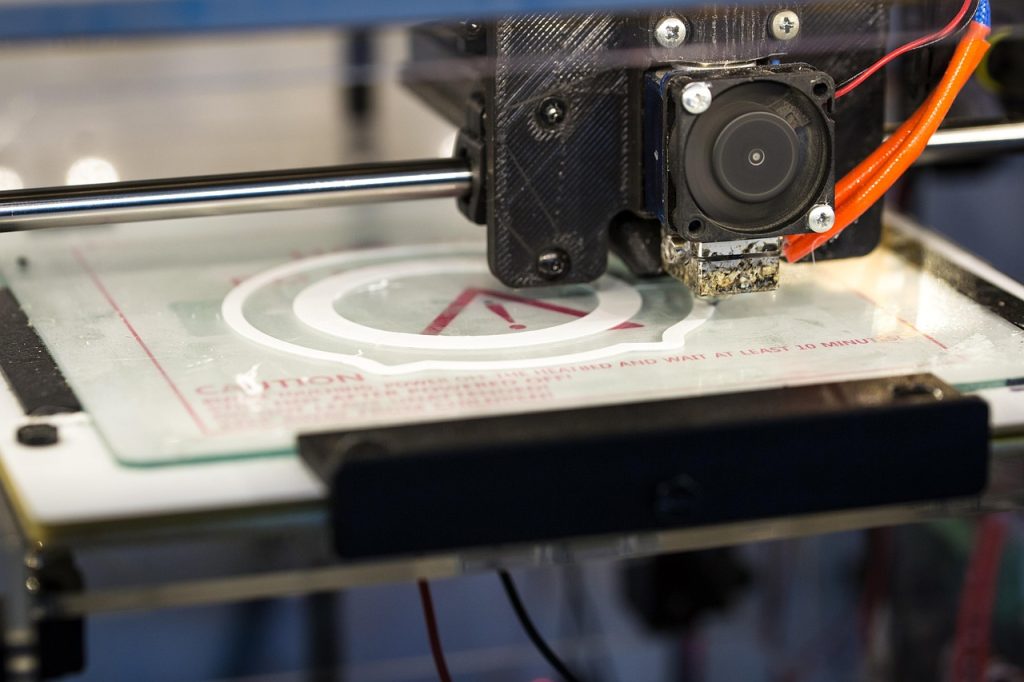
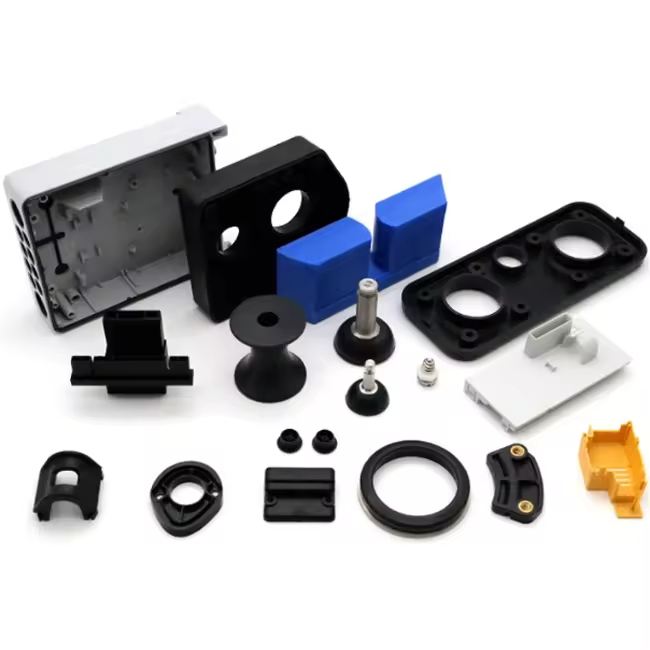
ASA (Acrylonitrile Styrene Acrylate) is an engineering-grade thermoplastic filament designed for FDM 3D printing applications requiring superior weather and UV resistance. As the improved successor to ABS, ASA maintains excellent mechanical properties while eliminating ABS’s primary weakness—sensitivity to ultraviolet radiation. This makes ASA the material of choice for outdoor applications, automotive components, and any parts exposed to sunlight.
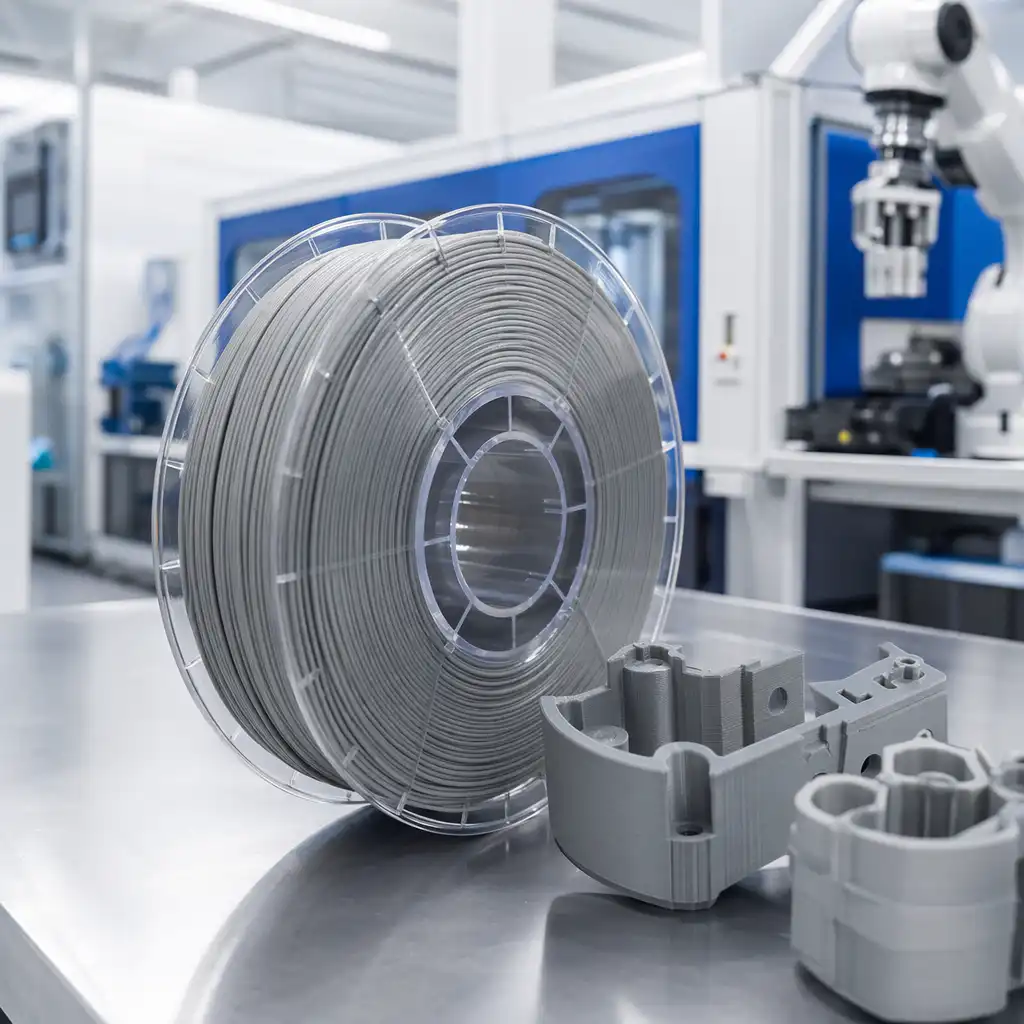
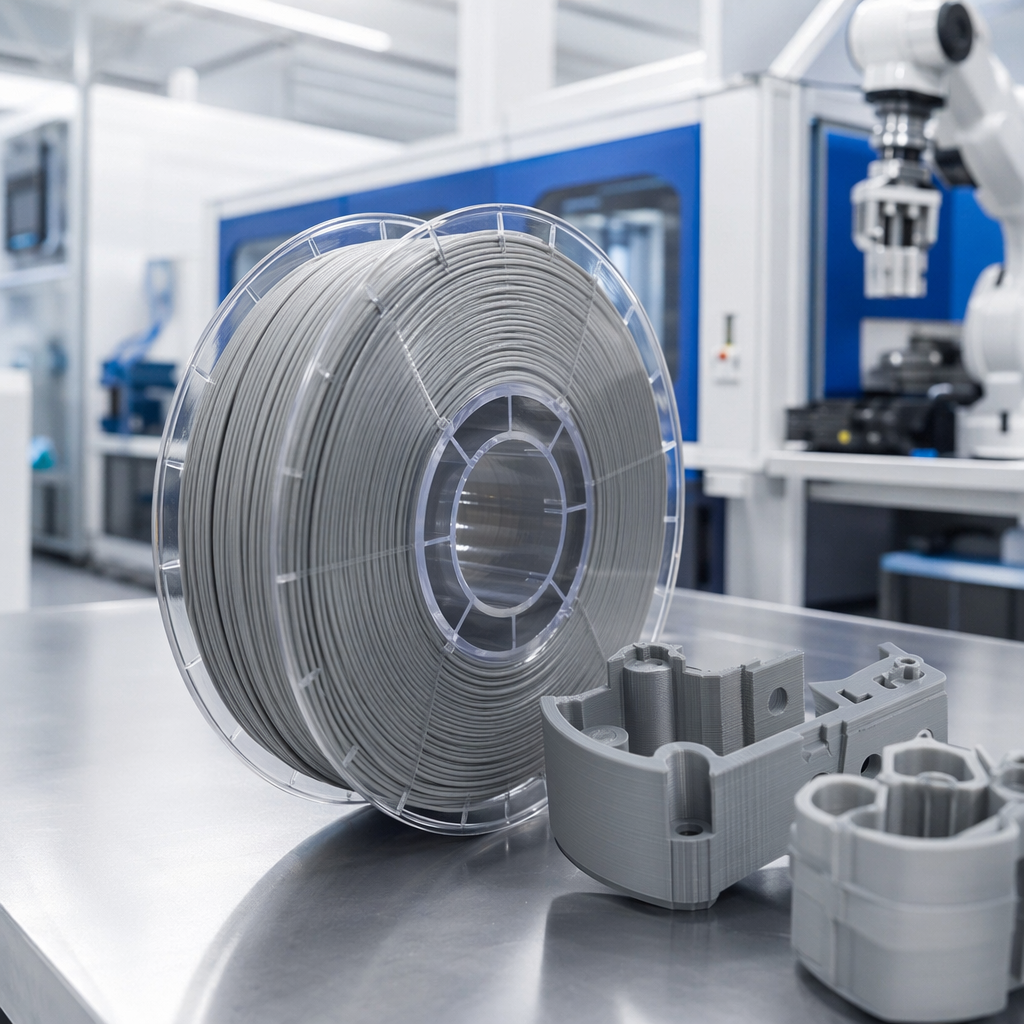
Key Properties of ASA Filament
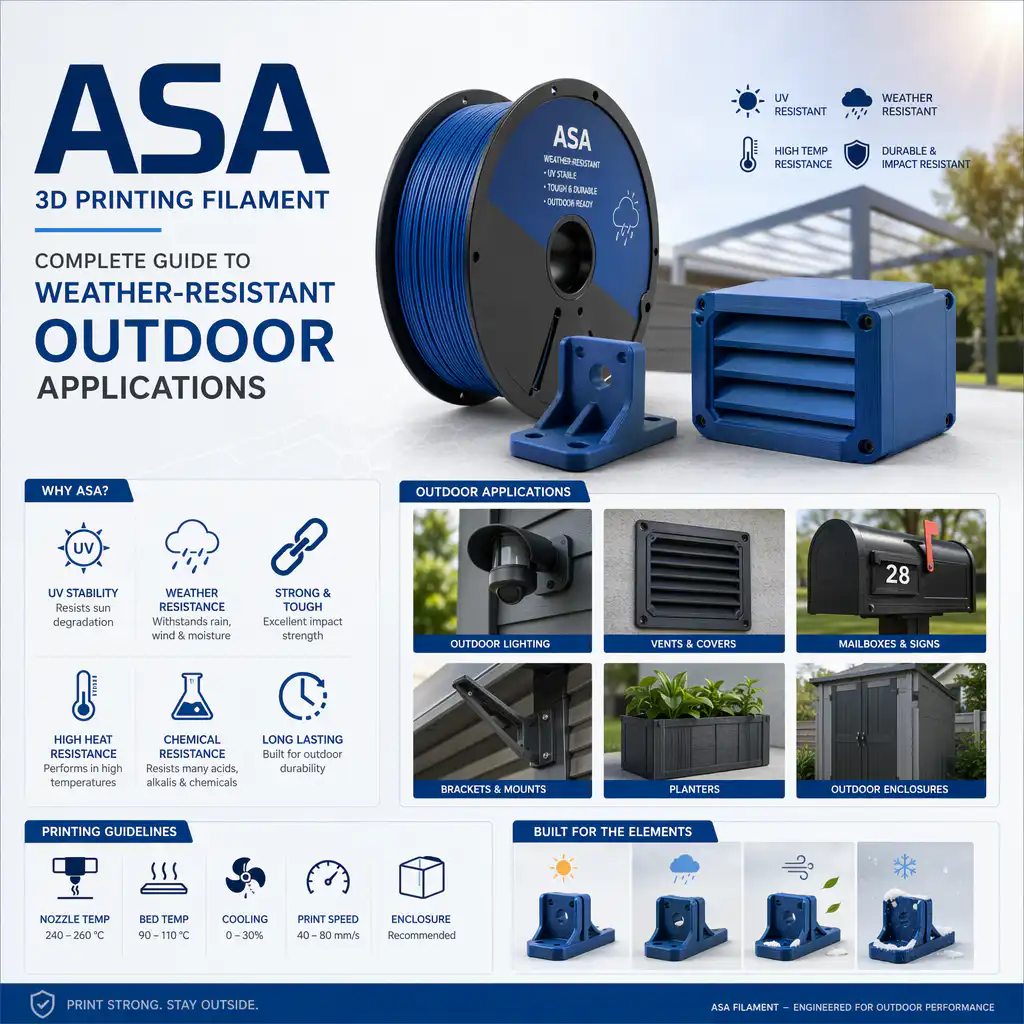
ASA offers excellent UV resistance, maintaining properties under prolonged sunlight without yellowing. With impact strength of 14-20 kJ/m² (Charpy notched), it’s comparable to ABS in toughness. The heat deflection temperature reaches 95-105°C at 0.45 MPa, and water absorption is only 0.5-0.7%, lower than ABS. For precision parts, consider our Sợi PA6-CF with excellent dimensional stability.
ASA vs ABS: The Critical Difference
While both materials offer similar mechanical properties and printability, ASA provides superior UV resistance. ABS typically begins degrading within weeks of outdoor exposure, while ASA maintains its properties for years. For engineering applications, PA66-CF30 offers even higher strength with carbon fiber reinforcement.
Optimal Print Settings
Print ASA at 240-260°C nozzle temperature with a heated bed at 90-110°C. An enclosed print chamber is strongly recommended to minimize warping. Use 40-70 mm/s print speed and 30-50% cooling fan for optimal layer adhesion.
Ứng dụng
ASA is ideal for automotive exterior parts (mirror housings, trim, covers), outdoor equipment and garden tools, drone frames and RC vehicle components, signage and display items, and solar panel mounting hardware.
Source Quality ASA Filament
As a specialized source manufacturer established in 2005, we provide integrated solutions from material modification to finished products. Our 6,000㎡ facility is equipped with 500+ advanced equipment including 1500-ton injection molding machines, multi-axis CNC centers, and 90+ 3D printing systems. Liên hệ với chúng tôi for samples and bulk pricing.
Nhận báo giá miễn phí
Hãy điền vào biểu mẫu dưới đây và các kỹ sư của chúng tôi sẽ phản hồi trong vòng 24 giờ.
Câu hỏi thường gặp
Khi nào thì sợi in 3D ASA — Hướng dẫn toàn diện về các ứng dụng ngoài trời chịu được thời tiết [THỬ NGHIỆM] là một lựa chọn phù hợp?
Sợi in 3D ASA — Hướng dẫn toàn diện về các ứng dụng NGOÀI TRỜI chịu được thời tiết [TEST] là một lựa chọn phù hợp khi tốc độ lặp lại nhanh, hình học phức tạp, chi phí khuôn mẫu thấp hoặc sản xuất số lượng nhỏ được ưu tiên hơn so với chi phí đơn vị của chi tiết đúc.
Cần kiểm tra những yếu tố nào trước khi chọn sợi in 3D ASA — Hướng dẫn toàn diện về các ứng dụng ngoài trời chịu được thời tiết [TEST]?
Kiểm tra kích thước chi tiết, tính chất vật liệu, độ nhám bề mặt, dung sai kích thước, mức độ tiếp xúc với nhiệt, hướng tải trọng và xem có cần xử lý sau gia công hay không.
Sợi in 3D ASA — Hướng dẫn toàn diện về các ứng dụng ngoài trời chịu được thời tiết [THỬ NGHIỆM] có gì khác biệt so với gia công CNC?
In 3D có thể tạo ra các hình dạng phức tạp một cách nhanh chóng, trong khi gia công CNC thường mang lại độ bền cao hơn cho các bề mặt chính xác, dung sai chặt chẽ hơn và sử dụng vật liệu đạt tiêu chuẩn sản xuất.
Những yếu tố nào ảnh hưởng đến giá thành của sợi in 3D ASA — Hướng dẫn toàn diện về các ứng dụng ngoài trời chịu được thời tiết [TEST]?
Chi phí phụ thuộc vào vật liệu, thể tích in, thời gian in, độ dày lớp, việc tháo khung đỡ, hoàn thiện, kiểm tra và số lượng chi tiết trong mô hình.