How nylon and reinforced nylon grades perform in automotive under-hood environments — thermal resistance, fluid resistance, weight reduction, and application examples.
Nylon’s Role in Modern Automotive Engineering
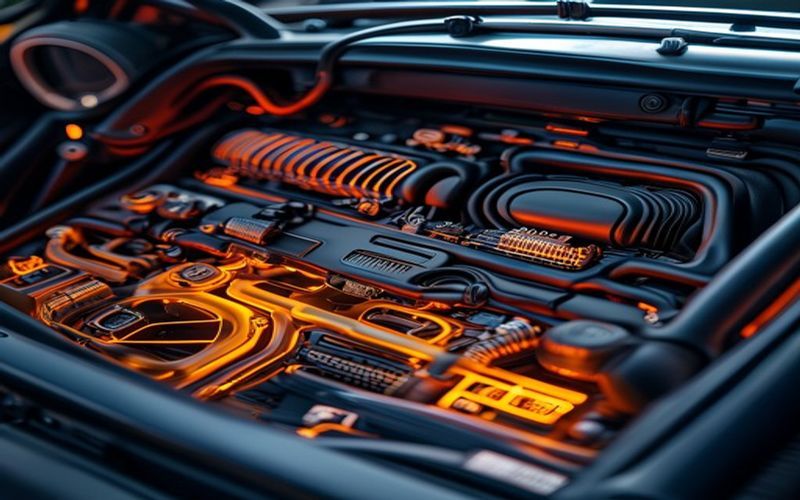
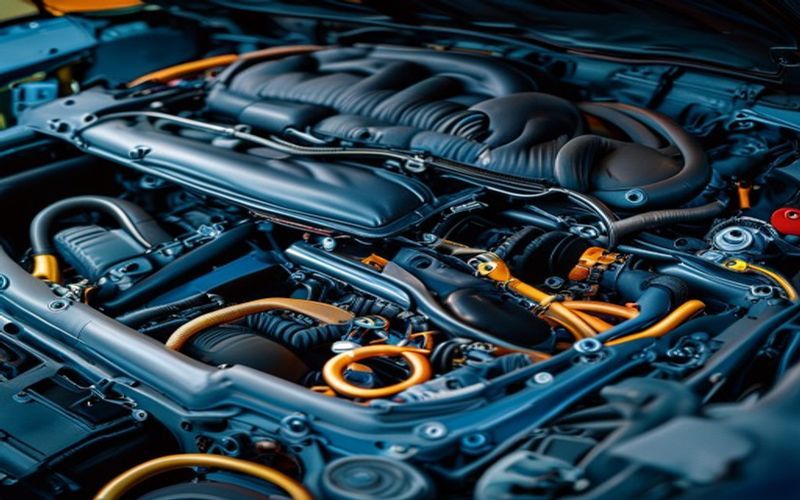
Automotive is the single largest end-use market for engineering plastics, and nylon is at the heart of this growth. Since the 1980s, nylon has progressively replaced metal in engine compartments, reducing vehicle weight, simplifying assembly, and lowering costs. Today, a typical vehicle contains 35-50kg of nylon components — from engine covers to fuel lines to air intake manifolds.
The shift to electric vehicles (EVs) has accelerated nylon adoption. EV battery housings, power electronics cooling systems, and motor components create new demanding applications where nylon’s electrical, thermal, and fire-retardant properties are essential.
Thermal Performance in Engine Compartments
Engine compartment temperatures under the hood create severe thermal challenges:
Temperature Zones (typical gasoline vehicle):
| Vị trí | Nhiệt độ liên tục | Nhiệt độ cao nhất |
|---|---|---|
| Gần khối động cơ | 120–150°C | 180°C |
| Ống nạp | 130–180 °C | 220°C |
| Nắp động cơ | 100–130°C | 160°C |
| Khu vực tản nhiệt | 85–105 °C | 130°C |
|---|---|---|
| Phần dưới gầm xe | -40 đến 90°C | 120°C |
Material Selection by Temperature Zone:
– 120-150°C zone (engine block vicinity): PA66-GF30 (HDT 250°C) is the standard. Glass fiber reinforcement maintains mechanical properties at these temperatures.
– 150-180°C zone (intake manifold): PA66-GF30 or PPA (polyphthalamide). Standard PA66 loses significant strength above 160°C.
– 85-120°C zone (radiator, coolant pipes): PA66-GF30 or PA6-GF30 sufficient.
– EV battery cooling (60-80°C): PA66-GF30 or PA6-GF30 excellent.
Thermal Aging:
Nylon loses strength over time at elevated temperature. PA66-GF30 retains approximately 60% of its original tensile strength after 1,000 hours at 150°C. Design engineers must account for thermal aging in long-life applications (15-year vehicle design life). Short-term peak temperatures are tolerable; it’s the continuous high-temperature exposure that degrades properties.
Fluid Resistance for Automotive Systems
Automotive under-hood environments expose components to complex fluid cocktails:
Critical Fluids and Nylon Compatibility:
| Fluid | Nylon PA66 | Nylon PA12 | Ghi chú |
|---|---|---|---|
| Engine oil (all grades) | Tuyệt vời | Tuyệt vời | Standard use |
| Coolant (50/50 glycol/water) | Tuyệt vời | Tuyệt vời | Standard use |
| ATF (automatic transmission) | Tuyệt vời | Tuyệt vời | Standard use |
| Power steering fluid | Tuyệt vời | Tuyệt vời | Standard use |
| Brake fluid (DOT 3/4) | Tốt | Tuyệt vời | PA12 preferred |
| Windshield washer fluid | Tuyệt vời | Tuyệt vời | Standard use |
|---|---|---|---|
| AdBlue (urea solution) | Tốt | Tuyệt vời | DEF system components |
Fuel System:
PA12 has become the global standard for automotive fuel lines due to its unique combination of:
– Excellent fuel resistance (gasoline, ethanol blends, diesel)
– Low moisture absorption (prevents fuel line freeze in cold climates)
– Flexibility forRouting around engine components
– Ability to be extruded and blow-molded into complex cross-sections
Metal fuel lines (steel, aluminum) are increasingly replaced by PA12 multi-layer fuel lines with EVOH barrier layers to prevent fuel vapor permeation.
Weight Reduction and Cost Benefits
The automotive industry’s relentless pursuit of fuel efficiency and EV range drives material substitution:
Weight Comparison: Metal vs. Nylon:
| Component | Steel (g) | Aluminum (g) | Nylon-GF30 (g) | Weight Savings |
|---|---|---|---|---|
| Air intake manifold | 3,200 | 1,800 | 950 | 70% vs steel |
| Nắp động cơ | 4,500 | 2,800 | 1,600 | 64% vs steel |
| Valve covers | 2,800 | 1,600 | 850 | 70% vs steel |
|---|---|---|---|---|
| Battery housing (EV) | 45,000 | 22,000 | 14,000 | 69% vs aluminum |
So sánh chi phí:
While nylon resin costs more per kg than steel or aluminum, the total system cost often favors plastics:
– Chi phí dụng cụ: Injection molds cost $50,000-500,000 vs. $200,000-2,000,000 for die casting
– Lắp ráp: Snap-fit designs eliminate fasteners and reduce assembly labor by 60-80%
– Part count: Multi-cavity molds produce multiple parts in one shot
– Các hoạt động thứ cấp: Nylon parts typically require no painting or finishing (inherent color options)
For high-volume vehicles (100,000+ units/year), nylon components typically deliver 20-40% total system cost savings vs. metal equivalents.
Electric Vehicle Specific Applications
EVs create new nylon application opportunities beyond traditional engine compartment use:
Battery Pack Components:
– Cell holders and module frames: PA66-GF30 with UL94 V-0 flame retardancy. Structural rigidity at 80-100°C continuous battery temperature. Thermal runaway protection requirements driving adoption of intumescent nylon grades.
– Cooling plate frames and channels: PA66-GF30 for coolant manifold frames. Excellent coolant (water/ethylene glycol) resistance. Complex geometries enable integrated flow paths.
– High voltage connector housings: PA66-FR (flame retardant) with CTI (Comparative Tracking Index) >600V. CTI is the critical parameter for high-voltage connectors.
Điện tử công suất:
– Inverter and converter housings: PA66-GF30 or PPA with thermal conductivity fillers for heat dissipation. Metal insert molding for EMC shielding.
– On-board charger (OBC) components: PA66-FR with high HDT for thermal management near heat sources.
Motor Components:
– Motor housing and brackets: PA66-GF30 or PA6-GF30 for structural motor mounts. Vibration and noise damping superior to aluminum.
– Wiring harness connectors: PA66-GR (glass reinforced) with excellent electrical properties.
Fire Safety Requirements:
EV battery components require flame retardant materials meeting:
– UL94 V-0 rating at minimum
– Glow wire ignition temperature (GWIT) >775°C
– Low smoke toxicity (European rail standards EN 45545 increasingly adopted for EVs)
Key Automotive Specifications and Grades
Automotive OEMs specify nylon grades against rigorous material specifications:
Common Automotive Nylon Specifications:
| Thông số kỹ thuật | Material Required | Các yêu cầu chính |
|---|---|---|
| GMW 3059 (GM) | PA66-GF30 | Thermal aging, fluid resistance |
| PSA D5554300 | PA66-GF30 | Engine compartment, coolant resistance |
| VW 50123 | PA66-GF30 | Fuel resistance, thermal aging |
| BMW GS 97016 | PA66-GF30/GF35 | Multi-fluid resistance |
|---|---|---|
| Continental / Continental | PA12 | Fuel lines, multi-layer coextrusion |
Key Performance Tests:
– Thermal oxidative aging (1500h at 150°C equivalent to 10+ years under-hood)
– Fluid immersion (1000h in engine oil, coolant, ATF at operating temperature)
– Mỏi do rung động (100 Hz, 10⁶-10⁷ cycles)
– Creep at temperature (1000h at 120°C under load)
– Flame retardancy (UL94, FMVSS 302 for interior)
nylonplastic.com’s Automotive Capability:
We supply PA6-CF and PA66-GF materials that meet key automotive specifications for non-critical structural components. For safety-critical applications (fuel lines, brake components), our materials serve as qualified alternatives to premium brands, subject to customer-specific qualification testing.
Câu hỏi thường gặp
Làm thế nào để biết liệu sản phẩm “Nylon cho các ứng dụng ô tô: Hiệu suất bên dưới nắp ca-pô” có phù hợp với một bộ phận hay không?
Nylon trong các ứng dụng ô tô: Hiệu suất bên trong khoang động cơ chỉ được đảm bảo khi khả năng chịu tải, dải nhiệt độ, khả năng chịu ẩm, đặc tính mài mòn và phương pháp gia công của chi tiết phù hợp với các điều kiện vận hành thực tế.
Cần kiểm tra những tính chất nào của nylon dùng trong ngành ô tô: Hiệu suất dưới nắp ca-pô?
Kiểm tra độ bền, độ cứng, khả năng chịu va đập, khả năng chịu nhiệt, độ hút ẩm, độ ổn định kích thước, hệ số ma sát, độ mài mòn và tính tương thích hóa học.
Rủi ro lớn nhất trong việc lựa chọn nylon cho các ứng dụng ô tô là gì: Hiệu suất bên dưới nắp ca-pô?
Rủi ro lớn nhất là việc lựa chọn dựa trên giá trị trong bảng thông số kỹ thuật mà không tính đến điều kiện môi trường thực tế, phương pháp gia công, hình dạng chi tiết và việc sử dụng lâu dài.
Khi nào nên tiến hành thử nghiệm “Nylon cho các ứng dụng ô tô: Hiệu suất dưới nắp ca-pô” trước khi đưa vào sản xuất?
Nên tiến hành thử nghiệm khi chi tiết phải chịu tải trọng, nhiệt độ cao, hóa chất, độ ẩm, dung sai chặt chẽ, các yêu cầu quy định hoặc môi trường vận hành mới.