Cẩm nang hướng dẫn đúc ép chính xác bằng nylon này trình bày các vấn đề thực tiễn liên quan đến vật liệu, thiết kế, sản xuất và nguồn cung ứng dành cho độc giả của tạp chí Nylon Plastic.
Trong lĩnh vực sản xuất, độ chính xác không chỉ là một thông số kỹ thuật — đó chính là yếu tố quyết định sự khác biệt giữa các chi tiết hoạt động đáng tin cậy và những chi tiết gây ra khó khăn trong quá trình lắp ráp, sự cố khi vận hành thực tế và khiếu nại từ khách hàng. Đối với quy trình ép phun nylon, việc đạt được và duy trì độ chính xác đòi hỏi chuyên môn cao ở mọi giai đoạn, từ thiết kế khuôn cho đến kiểm soát quy trình.
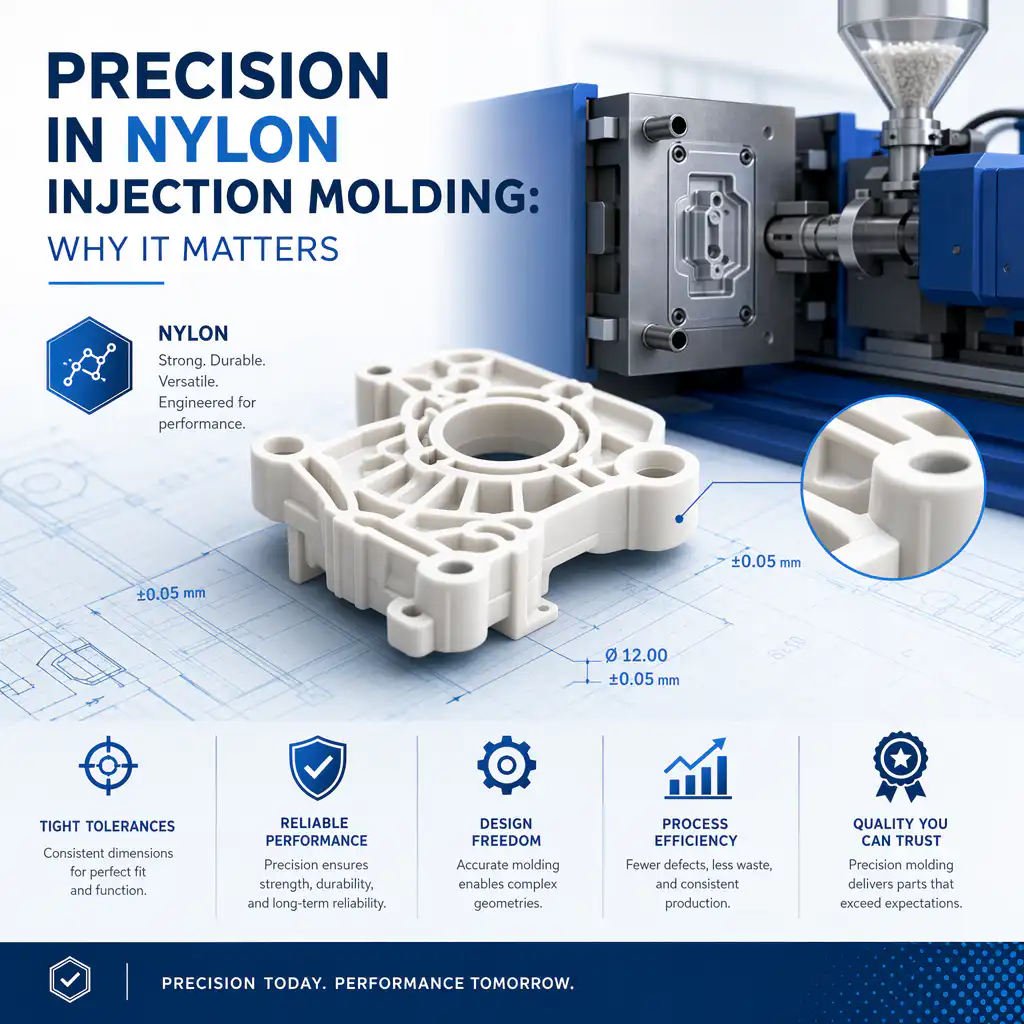

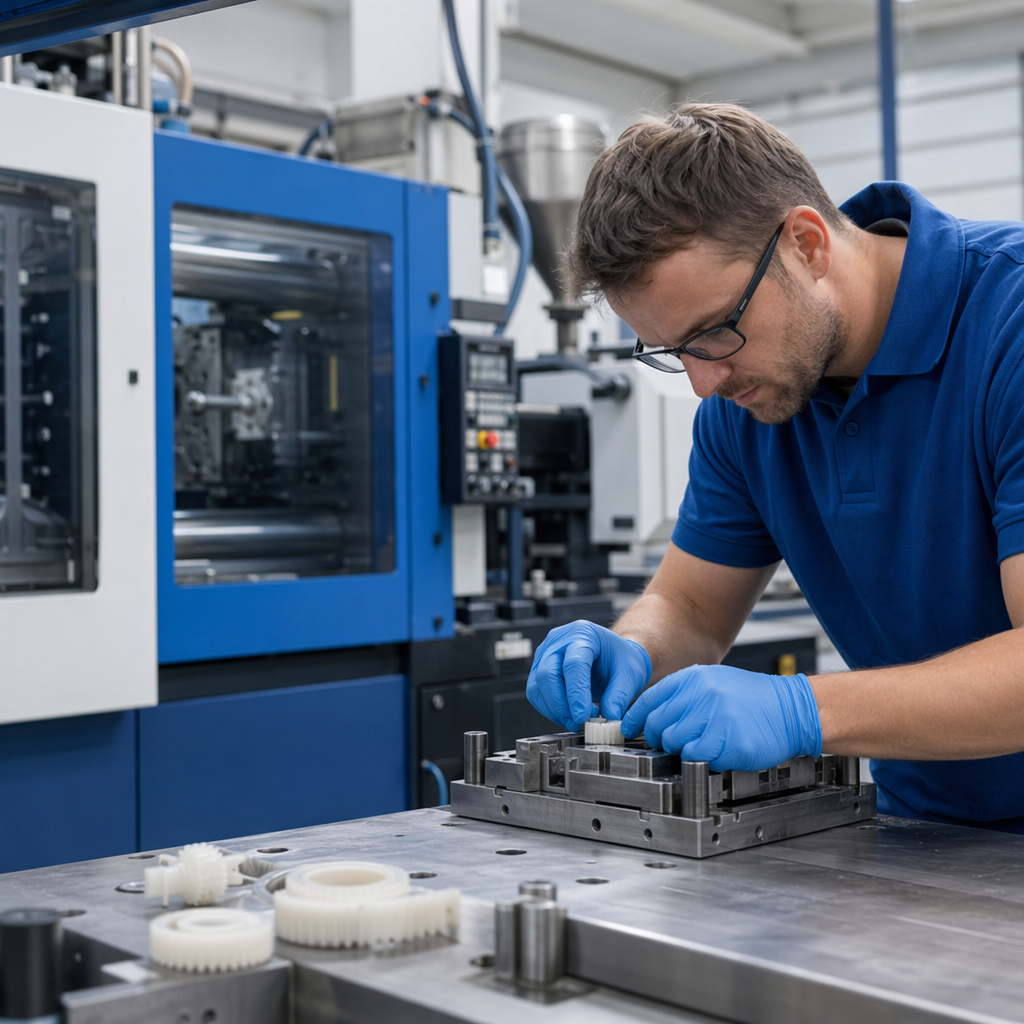
Định nghĩa độ chính xác trong đúc ép
Độ chính xác của các chi tiết đúc có nghĩa là luôn đáp ứng các thông số kỹ thuật về kích thước trong suốt hàng nghìn hoặc hàng triệu chu kỳ. Độ chính xác này được đo lường thông qua:
- Độ chính xác về kích thước: Kích thước thực tế so với kích thước danh nghĩa
- Độ lặp lại: Sự khác biệt giữa các khung hình
- Độ ổn định: Độ ổn định trong suốt vòng đời khuôn
- Khả năng dự đoán: Các giá trị Cpk chứng tỏ sự kiểm soát về mặt thống kê
Các yếu tố ảnh hưởng đến độ chính xác
Các yếu tố liên quan đến vật liệu
Nylon đặt ra những thách thức đặc thù về độ chính xác:
| Yếu tố | Ảnh hưởng đến độ chính xác | Giảm thiểu |
|---|---|---|
| Độ co ngót | 1.2-2.0%: Sự thay đổi kích thước | Bù đúc khuôn, kiểm soát quy trình |
| Khả năng hấp thụ độ ẩm | Sự phát triển kích thước 0,3–0,71 TP3T | Lựa chọn vật liệu, hệ số an toàn trong thiết kế |
| Độ kết tinh | Tùy thuộc vào tốc độ làm mát | Nhiệt độ khuôn ổn định |
| Sự cong vênh | Sự co ngót không đồng đều | Tối ưu hóa hệ thống làm mát, cân bằng thiết kế |
Các yếu tố liên quan đến quy trình
Các thông số quy trình ảnh hưởng trực tiếp đến kết quả về kích thước:
- Nhiệt độ nóng chảy: Ảnh hưởng đến độ nhớt, độ chảy và độ co ngót
- Tốc độ phun: Ảnh hưởng đến hướng và sự sắp xếp của sợi
- Áp suất đóng gói: Kiểm soát bù co ngót
- Thời gian làm mát: Ảnh hưởng đến quá trình hình thành độ kết tinh
- Nhiệt độ khuôn: Yếu tố then chốt trong việc kiểm soát độ kết tinh của nylon
Các yếu tố liên quan đến dụng cụ
Độ chính xác của khuôn quyết định độ chính xác của chi tiết:
- Độ chính xác của khoang: Kích thước khuôn phải tính đến độ co ngót
- Độ đồng đều của quá trình làm mát: Sự phân bố nhiệt độ đồng đều giúp ngăn ngừa hiện tượng cong vênh
- Điều chỉnh độ mòn: Các lỗ sâu răng sẽ mở rộng theo thời gian khi được trám bằng vật liệu trám răng
- Tính nhất quán trong công tác bảo trì: Việc vệ sinh và sửa chữa giúp duy trì các dung sai
Các ứng dụng đòi hỏi độ chính xác cao của nylon
Linh kiện ô tô
Bánh răng, ống lót và các bộ phận kết cấu đòi hỏi độ khớp chính xác và các tính chất cơ học ổn định. Một sai lệch chỉ 0,1 mm cũng có thể gây ra tiếng ồn, rung động hoặc lỗi lắp ráp.
Thiết bị y tế
Vỏ và các bộ phận dùng trong lĩnh vực y tế thường đòi hỏi độ chính xác cao để đảm bảo hoạt động đúng chức năng, khả năng tương thích với quy trình tiệt trùng và tuân thủ các quy định.
Điện tử
Các đầu nối và vỏ bảo vệ phải khớp chính xác với các bộ phận ghép nối. Việc lắp ghép không khít có thể dẫn đến sự cố kết nối, rò rỉ nhiễu điện từ (EMI) hoặc khả năng bịt kín không đảm bảo.
Đạt được độ chính xác: Phương pháp tiếp cận của chúng tôi
Quy trình đúc chính xác của chúng tôi bao gồm:
- Tối ưu hóa thiết kế: Phân tích DFM giúp xác định các đặc điểm đòi hỏi độ chính xác cao
- Mô phỏng dòng chảy khuôn: Dự đoán các mẫu co ngót và cong vênh
- Đúc khoa học: Phát triển quy trình dựa trên dữ liệu
- Kiểm soát quá trình bằng thống kê: Giám sát và điều chỉnh theo thời gian thực
- Các nghiên cứu về năng lực: Xác nhận Cpk đối với các kích thước quan trọng
Với hơn 20 năm kinh nghiệm trong lĩnh vực nhựa kỹ thuật, chúng tôi hiểu rõ cách đạt được và duy trì độ chính xác mà ứng dụng của quý khách yêu cầu.
Câu hỏi thường gặp
Trong trường hợp nào thì bài viết “Độ chính xác trong đúc phun nylon: Tại sao điều này lại quan trọng” lại có ý nghĩa?
“Độ chính xác trong ép phun nylon: Tại sao điều này lại quan trọng” là điều hoàn toàn hợp lý khi khối lượng chi tiết, lựa chọn vật liệu, hình học và yêu cầu về độ lặp lại đủ lớn để biện minh cho việc đầu tư vào thiết kế khuôn và dụng cụ gia công.
Những yếu tố thiết kế nào quan trọng nhất đối với độ chính xác trong đúc phun nylon: Tại sao điều này lại quan trọng?
Độ dày thành, gân, phần lồi, góc nghiêng, vị trí cửa rót, độ co ngót, đường phân chia và cơ chế đẩy đều ảnh hưởng đến chất lượng chi tiết đúc.
Cần những thông tin nào trước khi sản xuất khuôn?
Nhà cung cấp cần xác nhận mô hình 3D, vật liệu, khối lượng dự kiến hàng năm, các yêu cầu về hình thức, yêu cầu về dung sai, cũng như bất kỳ yêu cầu nào liên quan đến lắp ráp hoặc kiểm tra chức năng.
Rủi ro lớn nhất trong việc đảm bảo độ chính xác trong quá trình ép phun nylon là gì: Tại sao điều này lại quan trọng?
Rủi ro lớn nhất là phê duyệt khuôn mẫu trước khi các yếu tố như tính chất vật liệu, độ co ngót, quá trình chảy và chức năng của chi tiết được kiểm tra đầy đủ dựa trên điều kiện ứng dụng thực tế.