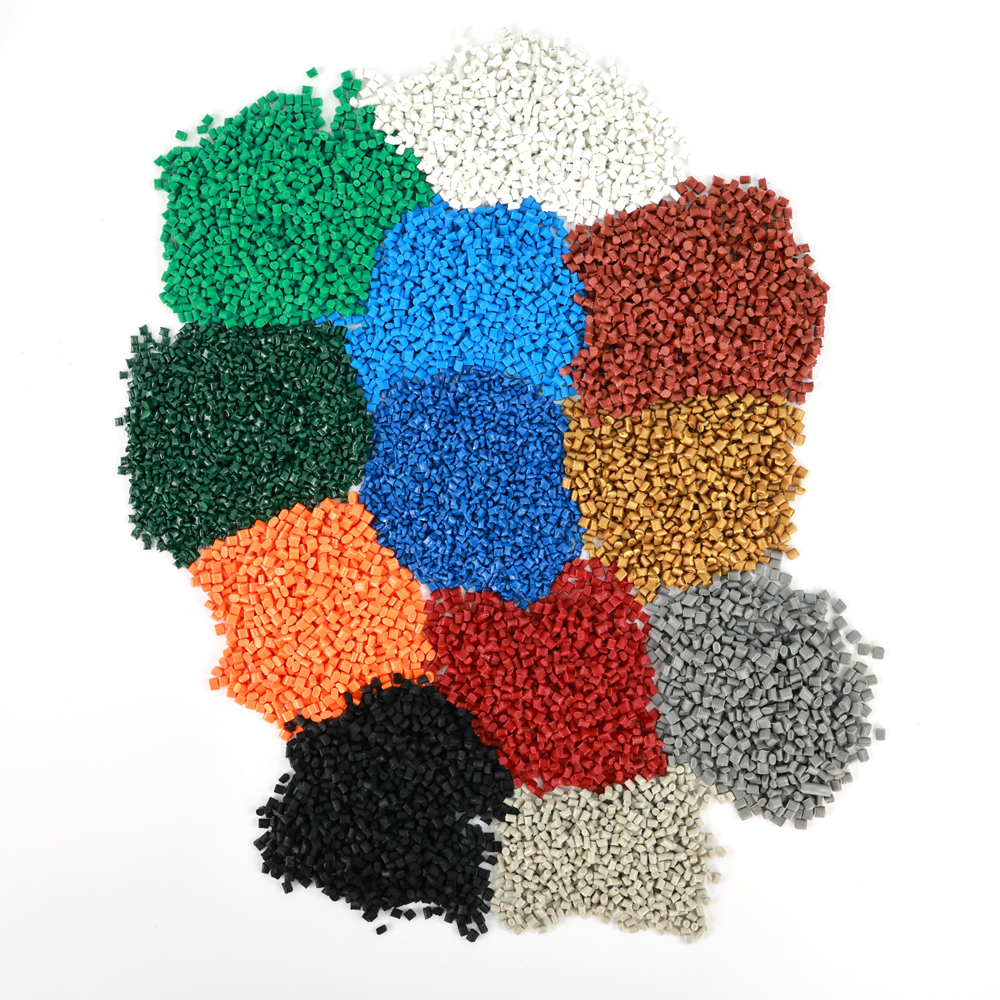
PA6 vs PA12 represents a critical decision point for engineers and product designers selecting a polyamide (nylon) for demanding applications. While both are high-performance engineering thermoplastics from the same family, they exhibit distinctly different property profiles. Understanding the properties, applications, and key differences between Nylon 6 and Nylon 12 is essential for optimizing part performance, cost-effectiveness, and manufacturability. This guide provides a detailed PA6 vs PA12 comparison to inform your material selection, supported by the material science expertise at Nylon Plastic.
Material choice for a real part
Select PA6 or PA12 by Service Conditions
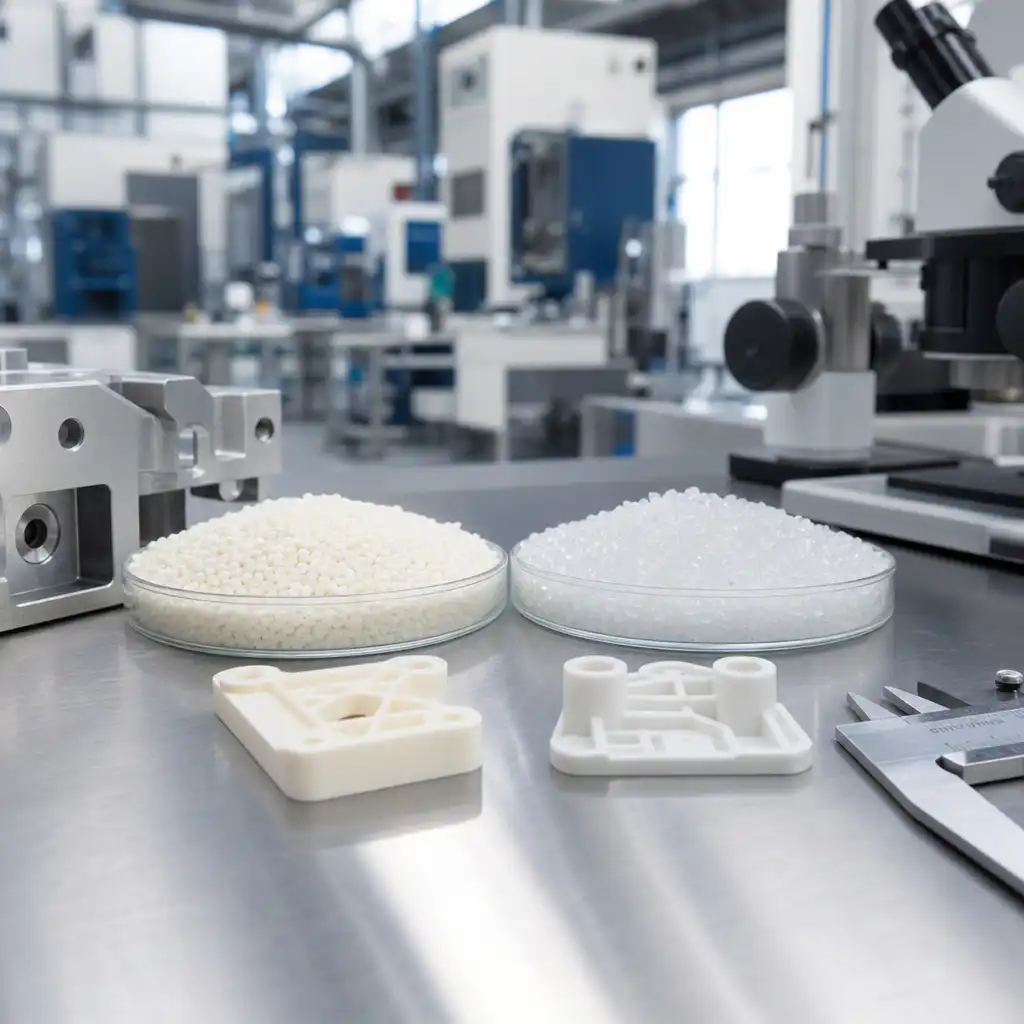
PA6 usually leads on stiffness, wear resistance and material economy. PA12 is often selected for lower moisture uptake, dimensional stability and low-temperature toughness. Confirm the choice against the drawing, environment and manufacturing route.
Introduction: Two Distinct Paths in the Polyamide Family
Polyamides are renowned for their excellent mechanical strength, good chemical resistance, and durability. PA6 (Nylon 6) is a versatile, cost-effective workhorse known for its high strength, rigidity, and excellent wear resistance. In contrast, PA12 (Nylon 12), derived from a longer polymer chain, trades a degree of that strength for exceptional moisture resistance, superior dimensional stability, and enhanced flexibility at low temperatures. The PA6 vs PA12 choice often hinges on the specific environmental challenges and priority of key properties in your application.
Head-to-Head Comparison: PA6 vs PA12 Properties
The following table provides a clear, side-by-side analysis of the core properties that define the PA6 vs PA12 debate.
| Tài sản | PA6 (Nylon 6) | PA12 (Nylon 12) | Những phân tích về quá trình tuyển chọn |
|---|---|---|---|
| Độ đặc | ~1,13 g/cm³ | ~1.01 g/cm³ | PA12 is lighter, beneficial for weight-critical designs. |
| Độ bền kéo | Cao (~80 MPa) | Medium (~50 MPa) | PA6 is superior for high structural strength and load-bearing components. |
| Flexural Modulus (Stiffness) | Cao (~3,200 MPa) | Medium (~1,500 MPa) | PA6 offers greater rigidity; PA12 provides more flexibility. |
| Khả năng chống va đập | Tốt | Very Good to Excellent | PA12 generally offers better toughness, especially at low temperatures. |
| Khả năng hấp thụ độ ẩm | Cao (~1.6% at 50% RH) | Rất thấp (~0.25% at 50% RH) | PA12 is vastly superior for dimensional stability in humid or wet environments. PA6 requires careful drying before processing. |
| Điểm nóng chảy | ~220°C | ~178°C | PA6 withstands higher continuous service temperatures. |
| Khả năng chống hóa chất | Good to oils & fuels | Excellent to oils, fuels, salts, and chemicals | PA12 has broader chemical resistance, making it ideal for harsh environments. |
| Đặc điểm chính | Strength, Rigidity, Abrasion Resistance | Moisture Resistance, Dimensional Stability, Ductility |
Application Guidelines: When to Choose PA6 vs PA12
The property differences directly translate into preferred application areas.
Choose PA6 (Nylon 6) for:
-
High-Strength Structural Parts: Gears, bearings, bushings, and engine covers where rigidity and wear resistance are paramount.
-
Cost-Driven Applications: Where ultimate performance in humid environments is not critical, and the excellent balance of properties at a lower cost is key.
-
Components Subject to Friction: Excellent abrasion resistance makes it ideal for sliding and rotating parts.
Choose PA12 (Nylon 12) for:
-
Precision Components in Humid Environments: Fluid and hydraulic system components (e.g., reservoirs, lines), electrical connectors in outdoor applications, where ổn định kích thước is critical.
-
Applications Requiring Flexibility & Toughness: Cable ties, flexible tubing, sports equipment, and components that must remain ductile at low temperatures.
-
Harsh Chemical Exposure: Parts in constant contact with aggressive chemicals, fuels, or salts where superior chemical resistance is required.
At Nylon Plastic, we provide expert guidance to navigate this PA6 vs PA12 decision. Explore our PA6 material solutions and learn about our PA12 material series engineered for specialized performance.
Material selection should be checked against the part, not only the datasheet.
Send the drawing, working humidity, temperature, tolerance and annual volume. We can identify whether PA6, PA12 or a reinforced grade is the lower-risk production choice.
Processing and Manufacturing Considerations
Both materials are readily processable, but their inherent properties dictate different handling.
-
Sấy khô: PA6 is highly hygroscopic and must be thoroughly dried before processing (e.g., 80°C for 3-4 hours) to prevent defects. PA12, with very low moisture uptake, requires significantly less drying effort.
-
Injection Molding: PA6 typically processes at higher melt temperatures (240-290°C) than PA12 (190-250°C). Shrinkage rates also differ, influencing mold design.
-
3D Printing (Additive Manufacturing): Both are available as filaments (e.g., for FDM) and powders (for SLS). PA12 is particularly renowned in SLS 3D printing for producing durable, complex, and dimensionally stable end-use parts.
For reliable results, partnering with an experienced manufacturer is key. Our one-stop injection molding services ensure your part is optimized for manufacturability, whether you choose PA6 or PA12.
PA6 vs PA12 FAQ
Which is more dimensionally stable in humidity, PA6 or PA12?
PA12 generally absorbs less moisture and is usually the safer option when humidity-driven dimensional change is the main concern.
Which material is usually more cost-effective?
PA6 is normally less expensive and offers higher stiffness, but total part cost also depends on drying, scrap risk, tolerances and the production process.
Can both PA6 and PA12 be glass- or carbon-fiber reinforced?
Yes. Reinforcement can increase stiffness and strength, but it also changes shrinkage, warpage, surface finish and tooling wear.
What information is needed to choose between PA6 and PA12?
Provide the drawing, load, temperature, humidity or chemical exposure, dimensional tolerance, manufacturing process and annual volume.
Final Material Selection
Cái PA6 vs PA12 debate has no universal winner. It requires a careful evaluation of your part’s mechanical, environmental, and cost requirements.
-
Select PA6 for maximum strength, rigidity, and thermal resistance.
-
Select PA12 for supreme moisture resistance, dimensional stability, and chemical resistance.
Need help deciding? Contact Nylon Plastic’s engineering team today. We can provide technical consultations, material samples, and tailor-made compound solutions—whether standard or reinforced—to ensure your project’s success with the ideal polyamide.
Bài đọc liên quan
- Dịch vụ đúc phun nylon
- Khả năng hấp thụ độ ẩm của nylon
- Nylon Parts Manufacturer Guide
- Engineering Plastic Materials and Selection
Request a PA6 vs PA12 Project Review
Send the requirements that can change the material decision. The technical team can compare the resin, reinforcement and manufacturing route before quotation.
Drawing or CAD, critical dimensions and tolerance.
Load, temperature, humidity and chemical exposure.
PA6 or PA12, reinforcement, color and required documents.
Prototype or production quantity, destination and target timing.
Use the form below to request material guidance, samples, datasheets or a manufacturing quotation.