Injection mold tool steel selection should match the resin, expected production demand, surface requirement and maintenance plan. Buyers need a specification that explains where each steel is used, its condition, wear risks and maintenance plan.
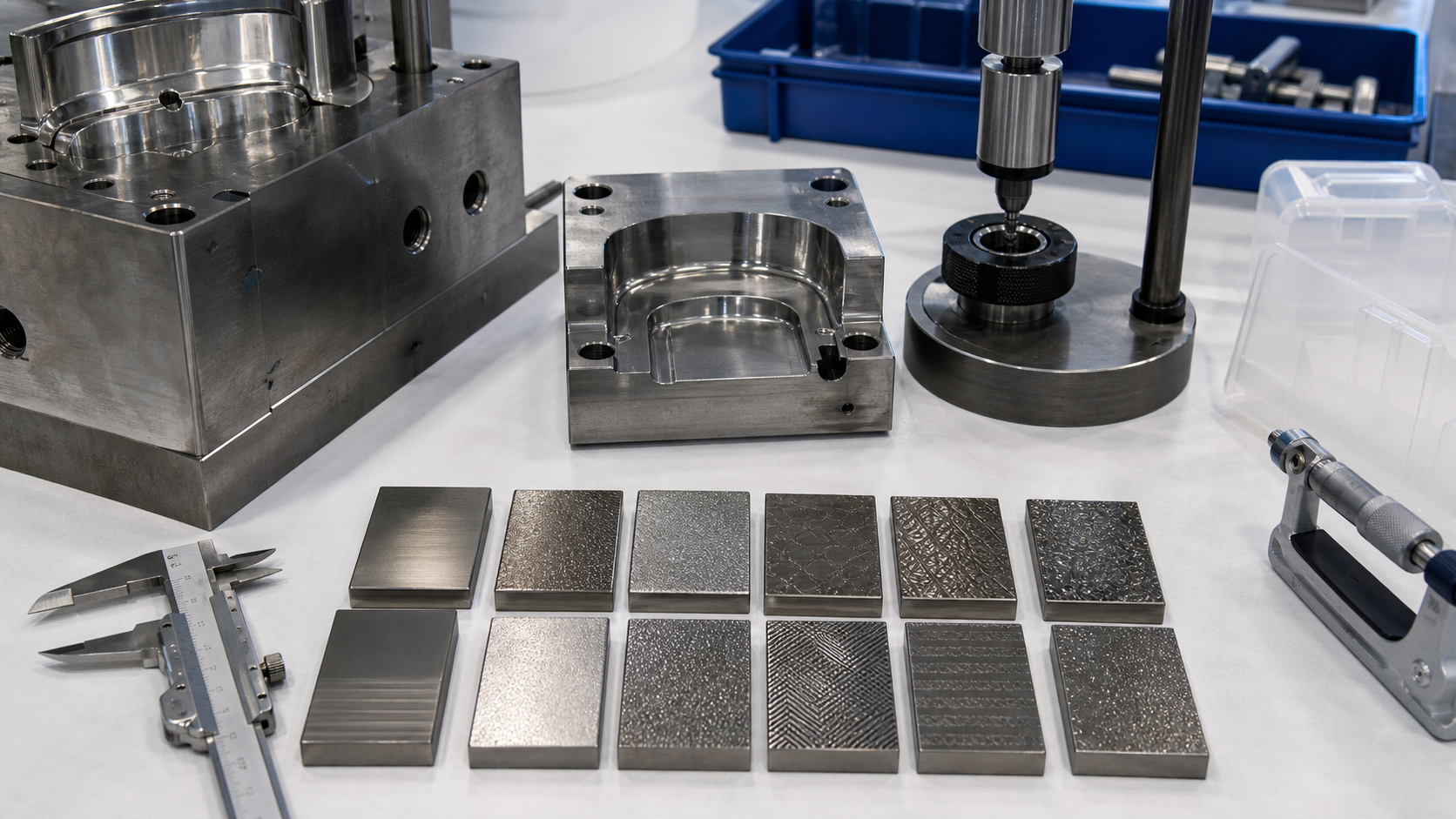
P20 vs H13 vs S136 vs 718 Mold Steel
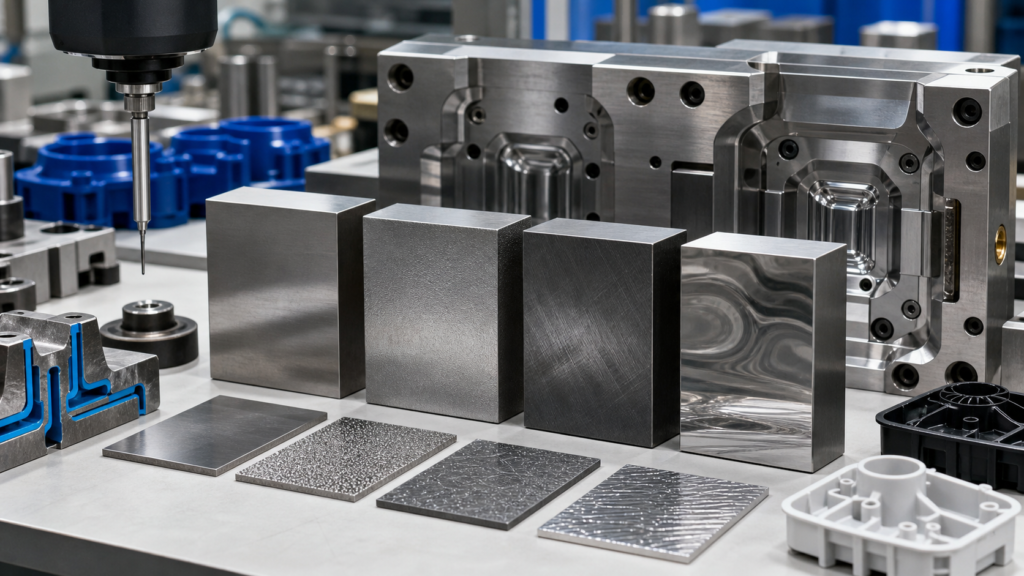
Steel names can describe families rather than one universal chemistry or hardness. P20 and 718 are commonly supplied pre-hardened, while H13 and S136 may be ordered in different conditions and heat treated for the application. The quotation should therefore state the steel producer or equivalent specification, supplied hardness, heat treatment and which mold components use that grade.
| Thép | Typical reason to select it | Best-fit mold duty | Main buyer watch-out |
|---|---|---|---|
| P20 | Good machinability, weld repair and commercial balance | General-purpose cavities, cores and mold bases for moderate duty | Confirm hardness and resin corrosion or abrasion risk before treating all P20 as equivalent. |
| 718 / 718H | Uniform pre-hardened condition and practical polish response | Larger commercial molds, housings and cosmetic parts requiring stable machining | 718 is often related to the P20 family; specify the exact supplier grade and hardness instead of buying only the name. |
| H13 | Hot-work toughness, heat resistance and stronger resistance to demanding thermal service | High-load inserts, gates, hot-runner areas and demanding production applications | Heat treatment, grinding and repair require tighter control; using H13 for the complete mold may add cost without value. |
| S136 | Corrosion resistance and high-polish capability | Transparent parts, optical surfaces, medical or clean molding needs, and corrosive environments | Polish quality depends on steel quality and heat treatment. Confirm whether the quotation means S136, S136H or an approved equivalent. |
Select Steel by Resin, Finish and Production Demand
The resin often creates more risk than the nominal shot quantity. Glass fiber and mineral filler increase abrasion at gates, runners and high-velocity flow areas. Flame-retardant systems and some additives can create corrosive deposits when moisture, venting or shutdown practices are poorly controlled. Transparent parts expose polishing defects that would be acceptable on a hidden structural component.
| Project condition | Practical starting direction | What to confirm before approval |
|---|---|---|
| Unfilled ABS, PP or PE; moderate volume; normal texture | P20 or 718-type pre-hardened steel may provide a sensible cost and lead-time balance. | Required hardness, texture repair method, cavity count and expected maintenance interval. |
| Glass-filled PA, PBT, PPS or abrasive compounds | Use hardened wear-resistant inserts in gates, runners and high-wear cavity areas; H13 may be considered for demanding inserts. | Filler percentage, flow direction, replaceable insert strategy and hardness certification. |
| PVC, flame-retardant grades or humid/corrosive molding conditions | Evaluate stainless or corrosion-resistant steel such as an appropriate S136 condition. | Resin decomposition risk, venting, cooling-water quality, cleaning method and shutdown procedure. |
| Clear PC, PMMA or high-gloss cosmetic surfaces | Prioritize clean steel, polish response and corrosion control; S136 may justify its premium. | Required SPI finish, approved visual standard, gate position and who is responsible for final polishing. |
| Long program with repeat orders and stable design | Invest in durable cavity steel and replaceable wear components where downtime would be costly. | Expected lifetime, preventive maintenance, spare inserts, repair turnaround and transfer conditions. |
| Prototype or uncertain demand | A lower-cost pre-hardened tool or rapid-tool strategy may be more rational than premium steel throughout. | Maximum planned quantity, resin restrictions, design-change allowance and upgrade path. |
Express production volume as annual demand, order size and expected program life. Review rapid tooling and production tooling before approving premium steel for a design that may still change.
Mixed-Steel Strategies Can Control Cost
Core, cavity, gate insert, slide, lifter and mold base do not always need the same steel. A mixed strategy can place better steel only where abrasion, corrosion, polishing or impact creates risk. Replaceable gate and wear inserts can also reduce future repair time. The quotation and mold drawing should identify every material rather than stating one steel for the complete tool.
Maintenance Risks to Review Before Buying the Mold
| Observed risk | Likely steel or maintenance issue | Preventive action |
|---|---|---|
| Gate or runner dimensions drift | Abrasive wear, insufficient hardness or poor insert strategy | Measure wear areas, use replaceable inserts and define inspection intervals. |
| Rust, staining or pitting | Condensation, cooling-water leakage, corrosive resin deposits or inadequate storage protection | Control shutdown cleaning, water quality, storage humidity and corrosion protection. |
| Cosmetic gloss changes after repair | Different weld response, local hardness variation or uncontrolled repolishing | Document the approved finish and use qualified repair and polishing procedures. |
| Cracks near sharp corners or inserts | Heat-treatment stress, stress concentration, impact or poor fit | Review radii, fit, preload, hardness and repair history before welding again. |
| Flash develops at shutoffs | Wear, galling, deformation or alignment loss | Inspect sliding surfaces and guidance components before changing molding pressure. |
Tool Steel Questions for the RFQ and Purchase Order
- Which steel is used for the mold base, cavities, cores, inserts, slides and lifters?
- What supplier grade, equivalent standard and delivered hardness are proposed?
- Which components will be heat treated, nitrided, coated or polished?
- What resin, filler level, annual quantity and program life support the recommendation?
- Which gate, runner and shutoff areas are replaceable when wear occurs?
- What maintenance interval, spare parts and repair process are included?
- Will hardness certificates, steel certificates and maintenance records be supplied?
- Does the buyer own the mold drawings, electrodes, inserts and dedicated gauges?
Review steel together with the mold design and manufacturing plan. Phương pháp gia công điện cực chìm (Sinker EDM) features may require recast-layer control before polishing.
Bài đọc liên quan
Câu hỏi thường gặp
Làm thế nào để chọn thép khuôn ép phun?
Start with the resin and filler level, lifetime quantity, surface finish, corrosion exposure and critical wear areas. Then specify the steel grade, hardness and mold components that use it.
Trong trường hợp khuôn ép phun, khi nào thì H13 tốt hơn P20?
H13 is considered when an insert needs greater hot-work toughness, heat resistance or durability than general pre-hardened P20. It is often used selectively in demanding gates, runners or inserts.
Why use S136 stainless mold steel?
S136 is considered for corrosion resistance and demanding polish requirements, including transparent or high-gloss parts. Confirm its condition, heat treatment, approved equivalent and polishing responsibility.
Is 718 mold steel the same as P20?
718 and 718H are pre-hardened mold steels related to the P20 family, but designations and hardness vary. Purchase documents should identify the producer grade or approved equivalent.
Should the complete mold use the same steel?
Not necessarily. Many molds use different materials for the mold base, cavities, cores, gate inserts, slides and wear components. A mixed-steel strategy can control cost while placing corrosion, polish or wear resistance where it is actually needed.