Family là một chủ đề kỹ thuật thực tiễn khi bạn cần so sánh các phương án, kiểm tra các giới hạn và lựa chọn quy trình có mức độ rủi ro thấp hơn.
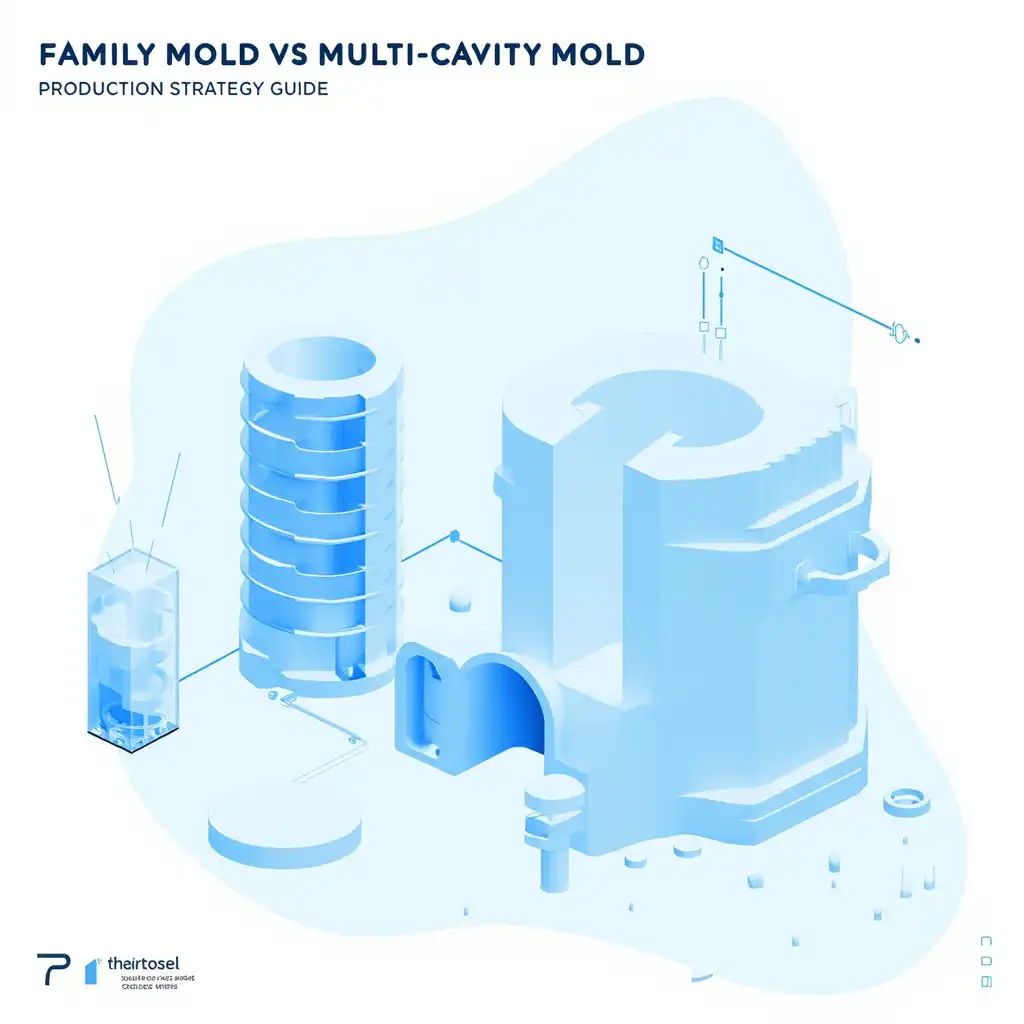
Understanding Mold Configurations
Mold configuration significantly impacts production cost, efficiency, and flexibility. Understanding the differences between family molds and multi-cavity molds helps optimize manufacturing strategy.
Multi-Cavity Molds
Multi-cavity molds produce multiple identical parts in a single cycle. All cavities are the same design.
Ưu điểm
- Maximum production efficiency
- Consistent part quality across cavities
- Easier process optimization
- Predictable cycle times
- Lower per-part cost at high volume
Challenges
- Higher mold cost
- Single part design per mold
- All cavities must be filled evenly
Các ứng dụng hay nhất
- High-volume single part production
- Parts requiring strict consistency
- Commodity components
Family Molds
Family molds produce different parts in the same mold. Multiple part designs share a single mold base.
Ưu điểm
- Lower total mold investment
- Produces multiple parts simultaneously
- Suitable for low-volume assemblies
- Reduces inventory complexity
Challenges
- Difficult to balance fill between cavities
- Different parts may need different cycle times
- Quality control more complex
- May require compromise on process parameters
Các ứng dụng hay nhất
- Low to medium volume assemblies
- Related parts with similar size and material
- Prototype and bridge production
Key Decision Factors
Design Considerations for Family Molds
Part Similarity
- Similar wall thickness
- Compatible materials
- Comparable shot sizes
- Similar cooling requirements
Runner Balance
- Design runner system to balance fill
- Consider different cavity sizes
- May need flow restrictors
Gating Strategy
- Different gate sizes for different cavities
- Position gates for optimal fill
- Consider automatic degating
Ví dụ về phân tích chi phí
Scenario: Assembly with 4 different plastic parts, 50,000 sets per year
- Option A: 4 single-cavity molds = $60,000 total
- Option B: 1 family mold (4 cavities) = $25,000
- Option C: 4 multi-cavity molds (8 cavities each) = $120,000
For this volume, the family mold offers the best cost-efficiency.
Kết luận
Choose multi-cavity molds for high-volume, single-part production. Consider family molds for assemblies with multiple parts at lower volumes. Evaluate total cost, production needs, and part complexity.
Tài nguyên liên quan
- Ảnh hưởng của độ ẩm đối với nylon
- Hướng dẫn về nhiệt độ in trên vải nylon
- Gia công CNC nylon
- In 3D để tạo mẫu so với sản xuất
- Hướng dẫn lựa chọn vật liệu nhựa
Câu hỏi thường gặp
When does Family Mold vs Multi-Cavity Mold — Production Strategy Guide make sense?
Family Mold vs Multi-Cavity Mold — Production Strategy Guide makes sense when the part volume, material choice, geometry, and repeatability needs justify mold design and tooling investment.
What design factors matter most for Family Mold vs Multi-Cavity Mold — Production Strategy Guide?
Độ dày thành, gân, phần lồi, góc nghiêng, vị trí cửa rót, độ co ngót, đường phân chia và cơ chế đẩy đều ảnh hưởng đến chất lượng chi tiết đúc.
Cần những thông tin nào trước khi sản xuất khuôn?
Nhà cung cấp cần xác nhận mô hình 3D, vật liệu, khối lượng dự kiến hàng năm, các yêu cầu về hình thức, yêu cầu về dung sai, cũng như bất kỳ yêu cầu nào liên quan đến lắp ráp hoặc kiểm tra chức năng.
What is the biggest risk in Family Mold vs Multi-Cavity Mold — Production Strategy Guide?
Rủi ro lớn nhất là phê duyệt khuôn mẫu trước khi các yếu tố như tính chất vật liệu, độ co ngót, quá trình chảy và chức năng của chi tiết được kiểm tra đầy đủ dựa trên điều kiện ứng dụng thực tế.